Chatbots in 2026: The Evolution, Business Value, and Practical Guide
What Is a Chatbot? A Modern Definition
A chatbot is an interactive software agent designed to simulate conversation with human users, typically via text or audio. Chatbots can be simple decision-tree scripts or complex AI-powered systems capable of understanding natural language and context. In 2026, chatbots have become central to digital customer service, sales, and automation, operating across messaging apps, websites, and even voice channels.
Tip: A well-designed chatbot can handle customer inquiries 24/7, freeing up your human team for more complex tasks.
The Evolution: From ELIZA to AI-Driven Chatbots
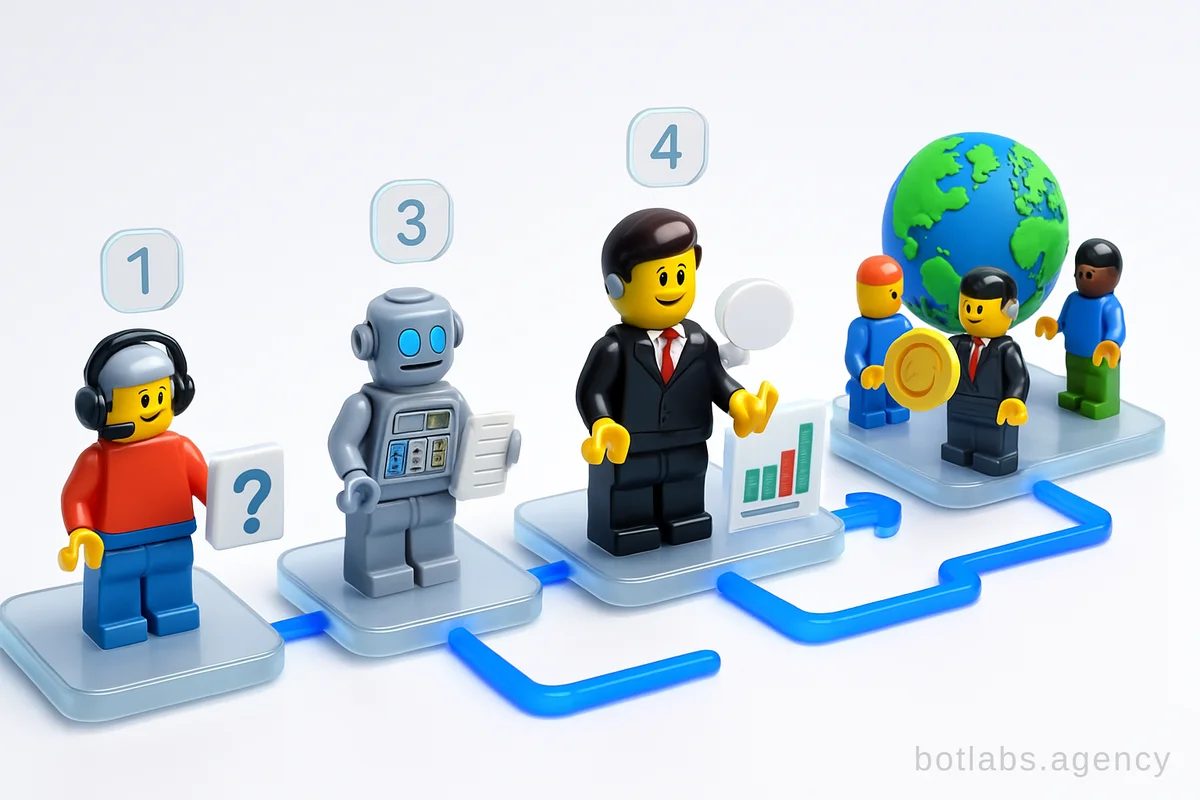
Chatbots have come a long way since the days of ELIZA (1966) and PARRY (1972), early programs that mimicked conversation based on pre-set scripts. While ELIZA could simulate a psychotherapist, it relied solely on pattern-matching, with no real understanding. Later bots like A.L.I.C.E. introduced markup languages (AIML), enabling more robust scripted interactions.
The real leap came with machine learning and natural language processing (NLP). Today’s chatbots, like those powered by GPT-based AI, learn from vast datasets, adapt to user input in real time, and can handle a wide range of queries. Some, like Jabberwacky, even learn context and responses from live user interactions, making conversations increasingly natural.
| Chatbot Era | Technology | Notable Examples |
|---|---|---|
| 1960s-1980s | Pattern matching | ELIZA, PARRY |
| 1990s-2010s | Scripted, markup language | A.L.I.C.E., Jabberwacky |
| 2020-present | AI, machine learning, NLP | ChatGPT, Google Assistant, Telegram bots |
How Chatbots Work: Decision Trees vs. AI
Chatbots generally fall into two categories:
- Rule-based chatbots: Rely on predefined scripts and decision trees. They offer users multiple-choice responses and handle simple tasks like FAQs or order status updates.
- AI-powered chatbots: Use machine learning to interpret natural language, context, and intent. They can answer open-ended questions, learn from interactions, and even generate personalized recommendations.
For example, a Telegram bot for a retail store might handle loyalty program queries using scripted options, while an AI bot can process free-form customer complaints and resolve them autonomously.
Tip: Combining rule-based flows with AI-powered modules delivers both reliability and flexibility in customer communication.
Why Chatbots Are Essential for Business in 2026
The business case for chatbots is stronger than ever:
- 24/7 customer service: 64% of consumers value round-the-clock support. Chatbots never sleep, ensuring inquiries are answered instantly, whether it’s 3 p.m. or 3 a.m.
- Cost efficiency: Chatbots reduce the need for large support teams. Once developed, a bot can manage thousands of conversations simultaneously, lowering payroll and operational costs.
- Lead generation & qualification: Bots can ask targeted questions, segment visitors, and pass qualified leads to human sales teams, increasing conversion rates by up to 28% (as seen in BotLabs Agency B2B case studies).
- Personalization: AI chatbots tailor their responses and recommendations based on user behavior, purchase history, or preferences.
- Scaling globally: With multilingual capabilities, businesses can serve customers in multiple countries without hiring separate teams.
Table: Key Benefits of Chatbots for Business
| Benefit | Description | Example |
|---|---|---|
| 24/7 Service | Immediate response at any time | Automated FAQ on an e-commerce site |
| Cost Savings | Reduces manual support hours | Bank chatbot handling routine queries |
| Lead Generation | Captures and qualifies prospects | B2B CRM bot increasing conversions |
| Personalization | Customizes offers & support | Retail bot suggesting products |
| Data Collection | Gathers user feedback for optimization | Restaurant bot surveying diners |
Chatbots in Messaging Apps: Where Your Customers Are
Messaging platforms like Telegram, WhatsApp, and Facebook Messenger are where billions of users spend their time. By 2026, most brands have a presence on at least one messaging app, often with a dedicated chatbot.
- Telegram: Popular for its open API and robust bot support. Bots can manage loyalty programs, automate orders, or offer customer support. For example, BotLabs Agency developed a Telegram bot for UA Made retail chain, resulting in a 34% increase in repeat purchases.
- WhatsApp: Essential for international business. Bots facilitate appointment bookings, order tracking, or customer care in real time across borders.
- Facebook Messenger: With over 1.2 billion active users, Messenger bots help brands scale messaging campaigns and automate support.
Tip: Start with the platform your audience uses most. For Ukrainian businesses, Telegram and Viber are especially impactful (see more).
Practical Use Cases: Beyond Customer Support
Chatbots are not limited to answering FAQs. Their applications in 2026 are diverse:
- E-commerce: Product recommendations, abandoned cart recovery, order tracking.
- Banking: Balance checks, transaction history, loan eligibility.
- Healthcare: Appointment scheduling, symptom checks, medication reminders.
- HR & Recruitment: Screening candidates, onboarding, feedback collection.
- Municipal services: Reporting issues, accessing public information, queuing systems.
Callout:
Case Study: BotLabs Agency’s AI chatbot for @UAmadeBot automated 24/7 support, reducing response times from 2 hours to just 30 seconds (learn how).
How to Build a Chatbot: Step-by-Step Guide
Building a chatbot is more accessible than ever, even without coding expertise. Here’s a practical approach:
1. Define Your Goals:
- What do you want your chatbot to do? (E.g., answer FAQs, process orders, generate leads)
2. Choose the Right Platform:
- Telegram, WhatsApp, Messenger, or website widget? Consider where your audience is most active.
3. Select the Bot Type:
- Rule-based (for simple flows) or AI-powered (for advanced, dynamic conversations)?
4. Design Conversation Flows:
- Outline possible user journeys. Use visual tools or flowcharts to map out interactions.
5. Build and Test:
- Use platforms like SendPulse, BotLabs, or native Telegram APIs. Test with real users and refine responses.
6. Integrate With Your CRM or Business Tools:
- Connect your bot to sales, support, or marketing systems for seamless automation.
7. Monitor and Optimize:
- Track engagement, analyze conversations, and update scripts or AI models based on user feedback.
Tip: Partnering with a dedicated agency like BotLabs can accelerate development and ensure a high-ROI deployment (see portfolio).
Common Challenges and How to Overcome Them
While chatbots offer immense value, businesses often encounter hurdles:
- Limited understanding: Rule-based bots can get stuck on unexpected queries. Solution: blend scripts with AI modules or provide easy handoff to human agents.
- User adoption: Some users prefer human support. Solution: make escalation to live agents seamless within the chat.
- Data privacy: Collecting customer data via chatbots requires strict compliance (e.g., GDPR). Solution: be transparent and secure in data handling.
Table: Chatbot Use Cases by Industry
| Industry | Use Case | Value Delivered |
|---|---|---|
| Retail | Loyalty programs, order tracking | Increased repeat purchases, better CX |
| Banking | Account info, KYC onboarding | Faster service, lower support costs |
| Healthcare | Appointment booking, reminders | Reduced no-shows, improved access |
| HR | Candidate screening, onboarding | Efficient hiring, faster adaptation |
Q1: Can chatbots really replace human support?
A: Chatbots excel at handling repetitive and simple tasks, freeing humans for complex issues. The best systems offer smooth handover to live agents when needed.
Q2: How long does it take to deploy a business chatbot?
A: With agencies like BotLabs, development can take as little as 2-4 weeks, from analysis to launch, thanks to streamlined processes and proven frameworks.
Q3: Are chatbots secure for handling sensitive data?
A: Yes, when built with security best practices and compliance in mind. Always use encrypted channels and follow regional data protection laws.
---
Ready to discover how a chatbot can transform your business? Get a free chatbot consultation or browse our chatbot portfolio.

Need a chatbot for your business?
We automate your processes and boost sales.