Why a Cheap Chatbot Can Cost Your Business Much More: The Real Price of AI in 2026
Introduction: The Illusion of Cheap Chatbots for Logistics Companies
In 2026, logistics companies face intense pressure to automate processes, improve customer service, and control costs. The market is flooded with offers to build a "chatbot for logistics company" at bargain prices. But is a cheap chatbot truly cost-effective? Recent industry data and AI advancements reveal the hidden expenses and risks behind low-budget chatbot projects, especially in mission-critical sectors like logistics.
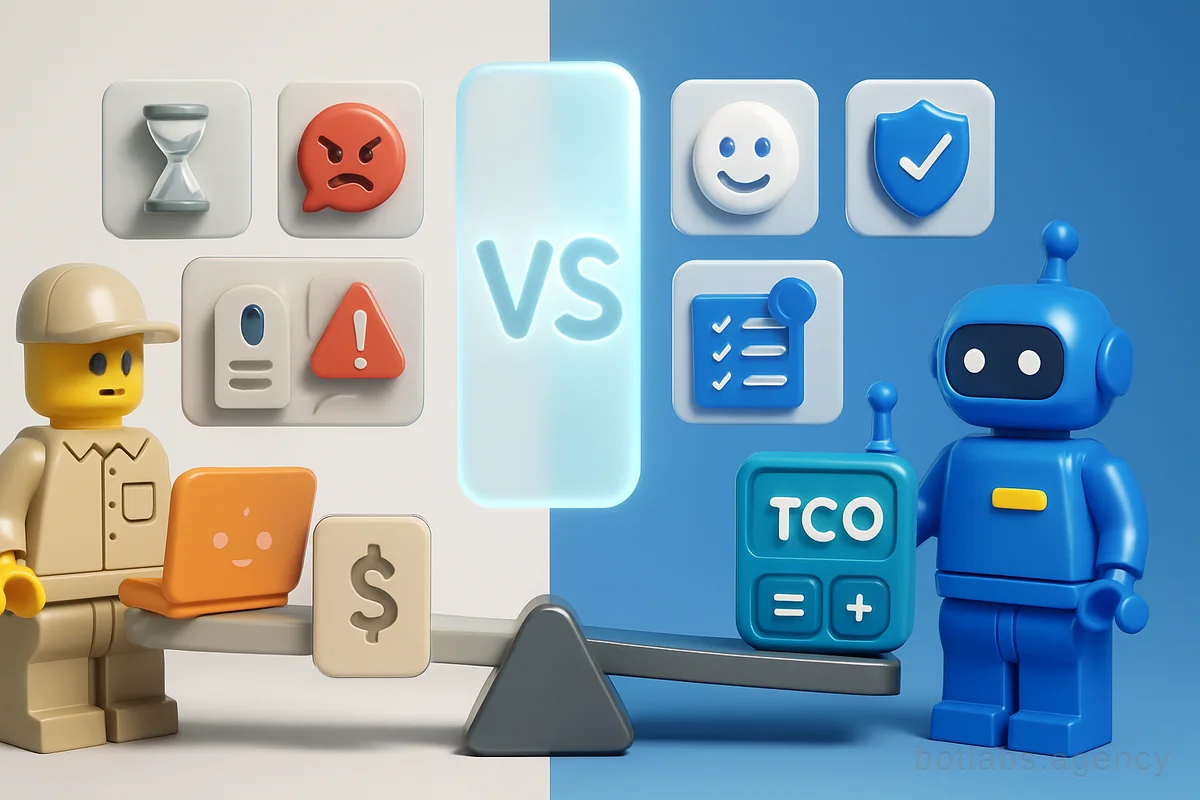
Tip: When considering automation, always calculate Total Cost of Ownership (TCO), not just the initial price tag.
The Hidden Costs of Building and Running AI Chatbots
AI isn't cheap. Tech giants like Microsoft and OpenAI spend up to $700,000 per day to keep models like ChatGPT running. Why so much? Because the real cost of AI includes:
- Training large language models (LLMs) on vast datasets (tens of millions of dollars)
- Paying skilled engineers and ongoing R&D
- Constant server upgrades and maintenance
- Daily operational expenses (electricity, cooling, bandwidth)
For example, running a sophisticated AI model like ChatGPT-4 (with over 343 billion parameters) requires massive computational power. Even with cloud GPUs costing $3/hour, simple calculations show that a single query can cost a cent or more. Multiply that by millions of queries, and the costs skyrocket.
| Cost Factor | Estimated Expense (USD) |
|---|---|
| Model Training | $10–50 million (one-time) |
| Daily Operations | $100,000–$700,000 (per day) |
| Personnel | $1–5 million/year |
| Infrastructure | $500,000+/year (hardware, servers) |
Source: Focus.ua
A cheap chatbot vendor typically does not have access to such resources, relying on off-the-shelf or outdated tech that may cut corners on data security, stability, or support. These shortcuts often lead to bigger headaches—and expenses—down the road.
Why Cheap Chatbots Fail: Reliability and Trust Issues
The hidden cost of a "cheap" chatbot isn't just technical debt. It's also about reliability. Recent studies show that even billion-dollar AI models like GPT-4.5 can "hallucinate"—generate wrong or misleading answers—up to 37% of the time. Simpler, cheaper models fare even worse, with error rates exceeding 60% or more.
Example: OpenAI's o3-mini model, designed to be lightweight and inexpensive, was found to give inaccurate responses in over 80% of queries (Focus.ua).
For logistics operations, where precision and trust are essential (think: shipment tracking, customs documentation, crisis management), such unreliability is simply unacceptable. A chatbot that gives the wrong delivery time, misplaces a parcel, or confuses locations can cause lost sales, customer churn, and even legal trouble.
The Domino Effect: How Cheap Chatbots Lead to Expensive Fixes
When a low-cost chatbot solution fails, the consequences ripple across your business:
- Lost Productivity: Employees waste time fixing or bypassing the chatbot.
- Customer Frustration: Inaccurate answers drive customers to competitors.
- Brand Damage: Negative reviews erode trust and reputation.
- Security Risks: Cheap vendors may not follow best practices, exposing sensitive data.
- Costly Replacements: Rebuilding or replacing a failed chatbot often costs more than doing it right from the start.
Tip: The true cost of a chatbot is not just the invoice. Factor in maintenance, downtime, and lost business opportunities.
Case Study: Automation in B2B Logistics Support
A prime example of chatbot automation in logistics is the KLEIBERIT B2B Dealer Support Chatbot developed by BotLabs Agency. Rather than opting for a "quick and cheap" solution, KLEIBERIT invested in robust automation for dealer support, product search, and order processing—critical functions for their industrial network.
Results:
- Automated dealer inquiries 24/7
- Reduced manual workload for support teams
- Improved order accuracy and turnaround time
This case underscores how quality chatbot design, tailored to logistics workflows, delivers measurable ROI and scales with business growth.
Table: Cheap Chatbot vs. Quality AI Solution
| Feature | Cheap Chatbot | Quality AI Chatbot (e.g., BotLabs) |
|---|---|---|
| Upfront Cost | Low | Moderate/High |
| Long-term Cost | High (maintenance, errors) | Lower (reliable, scalable) |
| Support | Limited or None | Ongoing, SLA-backed |
| Data Security | Often weak | Enterprise-grade |
| Customization | Minimal | Deep integration possible |
| AI Accuracy | Low | High (with regular updates) |
Practical Tips: How to Choose the Right Chatbot Partner for Logistics
- Ask for Proven Case Studies: Demand examples of logistics or B2B automation, such as the KLEIBERIT chatbot project.
- Check AI Reliability: Request evidence of model accuracy and error handling.
- Insist on Security: Ensure GDPR and industry compliance.
- Prioritize Support: Opt for vendors offering real technical support and maintenance.
- Calculate TCO: Look beyond the initial quote—factor in upgrades, downtime, and retraining.
- Look for Scalability: Can the solution grow with your business’ needs?
Tip: Consider hybrid models—combining AI with rule-based logic for mission-critical tasks—to minimize errors and maximize reliability.
The Future of Chatbots in Logistics: Quality Drives ROI
As AI matures, the gap between cheap, unreliable chatbots and robust, enterprise-grade solutions will only widen. Logistics companies that invest in quality AI automation enjoy sustained gains—better customer retention, streamlined operations, and competitive edge. Those who fall for ultra-low prices often find themselves paying more in the end, both financially and reputationally.
For a deeper dive into modern business automation, see How Chatbots Transform Business in 2026.
Callout Box: Real-World Impact
Did you know? Companies that replaced unreliable chatbots reported up to 28% higher lead conversion after switching to robust, well-supported solutions. (BotLabs Agency Case Data)
Q1: Do all cheap chatbots perform poorly?
A: Not all, but most low-cost solutions cut corners on tech, support, or data protection—which leads to poor reliability and higher costs over time.
Q2: How do I calculate the real cost of a chatbot for my logistics company?
A: Add up development, integration, ongoing support, maintenance, and losses from errors or downtime. Always prioritize TCO over sticker price.
Q3: Can a quality chatbot really improve my logistics operation?
A: Yes—well-designed chatbots automate repetitive tasks, improve accuracy, and free up staff for higher-value work, driving real ROI.
---
Ready to future-proof your logistics business? Get a free chatbot consultation from BotLabs Agency or explore our portfolio.

Need a chatbot for your business?
We automate your processes and boost sales.