AI-Powered Call Analysis for Sales Teams: How AI Recommendations Drive Results and ROI in 2026
Introduction: Why AI Call Analysis Matters for Sales Teams in 2026
The landscape of sales and customer communication has fundamentally shifted. Customers now expect immediate, personalized responses and seamless support across every interaction. For sales teams, missing the "moment of truth"—when a client is ready to buy or needs reassurance—can mean the difference between a closed deal and a lost opportunity. Enter AI-powered call analysis and recommendation systems, which are rapidly becoming essential tools for forward-thinking businesses striving to maximize ROI from their chatbot and sales automation investments.
The Challenge: Traditional Call Monitoring Falls Short
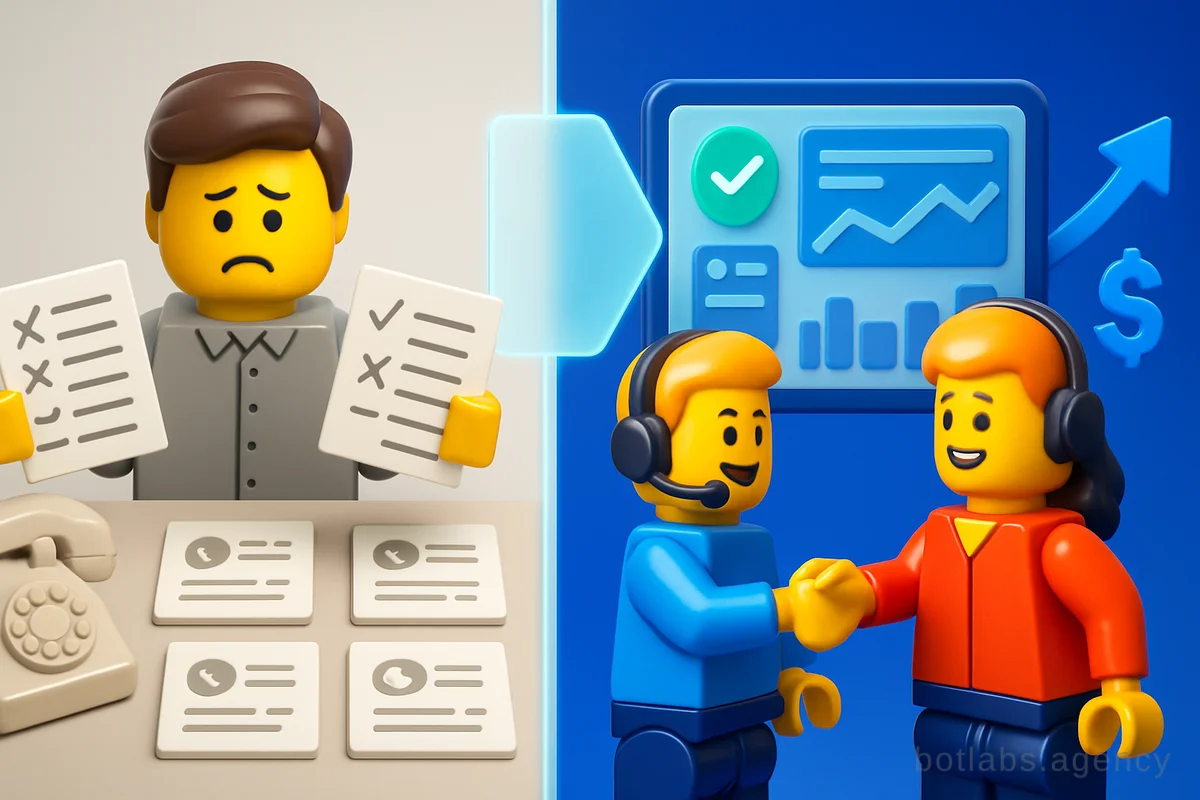
Contact centers and sales departments historically relied on supervisors randomly sampling a tiny fraction (2-5%) of calls for quality checks. This approach is:
- Inaccurate (misses patterns and systemic issues)
- Subjective (human bias affects scoring)
- Resource-intensive (manual reviews take time away from training and optimization)
- Slow (feedback reaches agents too late to correct mistakes in real time)
Ultimately, this means missed sales opportunities, inconsistent customer experience, and a limited understanding of what really drives conversions. With AI, 100% of calls can be analyzed in real time, providing a foundation for precise performance improvements and a true calculation of chatbot ROI.
How AI Call Analysis and Recommendations Work
AI-based call analysis systems use natural language processing (NLP), emotion detection, and intent recognition to transcribe, categorize, and interpret every conversation. The workflow typically includes:
- Call Transcription: Automatic conversion of speech to text for both agents and clients.
- Emotion and Intent Analysis: AI detects not just words, but tone, sentiment, and intent—identifying when a customer is frustrated, excited, or ready to buy.
- Compliance and Script Adherence: The system checks if required elements (greetings, upsells, closing statements) are present.
- Actionable Recommendations: Real-time suggestions (e.g., "now is the moment to offer a discount") guide agents to capitalize on key signals.
- Performance Tracking: KPIs (Key Performance Indicators) are automatically updated, and personalized feedback is generated for each agent.
Tip: Before implementing AI call analysis, collect real recordings, define your sales process stages, and set clear KPIs. Start with a pilot group, adapt recommendations, and scale up based on results.
Key Benefits: From Team Performance to Business Insights
Adopting AI-powered call analysis and recommendations delivers advantages at every level:
- Reduced Stress on Sales Managers: Agents receive clear, actionable guidance, boosting their confidence and reducing uncertainty during calls.
- Faster Onboarding: New hires learn from real conversations, shortening the learning curve and spreading best practices quickly.
- Personalized Coaching: AI identifies individual strengths and weaknesses, suggesting targeted training and gamified rewards for improvement.
- Consistent Quality: Every call is checked for compliance, ensuring a steady customer experience even as teams grow.
- Root Cause Analysis: AI surfaces frequent customer objections, product issues, or process bottlenecks, empowering leaders to act proactively.
Example Table: Comparing Traditional vs. AI-Driven Call Analysis
| Feature | Traditional Monitoring | AI-Powered Analysis |
|---|---|---|
| Calls Analyzed | 2-5% | 100% |
| Feedback Speed | Delayed (days/weeks) | Real-time |
| Bias | High (Human) | Low (Objective) |
| Actionable Insights | Limited | Extensive |
| Scalability | Poor | Excellent |
Real-World Case: Improving Sales and ROI with AI Chatbots
BotLabs Agency's projects illustrate the tangible impact of AI and automation on business outcomes. For instance, in the KLEIBERIT Case Study, a B2B dealer support chatbot automated product searches and order processing, helping managers focus on high-value interactions rather than repetitive queries. Meanwhile, the AstraDent Case Study demonstrated how AI-powered chatbots for clinics streamline appointment booking, reduce administrative overhead, and provide 24/7 support—directly improving operational ROI.
Calculating ROI: The Chatbot ROI Calculator Approach
To determine the real value of AI call analysis and chatbot solutions, you need a systematic ROI calculation model. Here’s a practical approach:
1. Identify Cost Metrics
- Labor Savings: Measure reduction in manual call reviews and administrative tasks.
- Training Costs: Calculate time saved in onboarding and ongoing coaching.
- Error Reduction: Quantify avoided mistakes (lost leads, compliance failures).
2. Measure Revenue Impact
- Conversion Rate Improvements: Track increases in successful sales or upsells.
- Customer Retention: Analyze repeat purchase rates and churn reduction.
- Cross-sell/Upsell Gains: Monitor additional sales generated through AI recommendations.
3. Factor in Customer Experience Metrics
- CSAT/NPS Scores: Improvements here often correlate with revenue growth.
- Complaint Volume: Fewer complaints indicate better service and less rework.
4. Calculate Payback and ROI
`
ROI (%) = [(Total Benefits - Total Costs) / Total Costs] * 100
`
Example Calculation Table
| Metric | Pre-AI Value | Post-AI Value | Gain/Loss |
|---|---|---|---|
| Call Reviews per Month | 200 | 2,000 | +1,800 |
| Agent Onboarding Time (hrs) | 40 | 25 | -15 |
| Sales Conversion Rate (%) | 12 | 16 | +4 |
| Customer Churn Rate (%) | 8 | 5 | -3 |
| Compliance Errors | 10 | 2 | -8 |
Tip: Use historical data and run pilot programs to compare before-and-after metrics. This real-world data makes your chatbot ROI calculator accurate and persuasive for stakeholders.
Overcoming Implementation Challenges
Implementing AI call analysis requires business readiness—not just technology. Key steps:
- Gather real call data and map your sales workflow.
- Define measurable KPIs for quality, conversion, and compliance.
- Pilot with a small team, customizing recommendations to real scenarios.
- Train managers and agents to interpret AI insights.
- Analyze results, iterate, and expand the rollout.
AI is not a magic bullet, but a powerful tool that, when integrated into business processes, transforms sales management, customer experience, and ROI calculation.
Practical Tips for Maximizing Value
- Integrate with CRM: Connect AI analysis to your CRM to trigger automated follow-ups and sales actions.
- Automate Routine Tasks: Let AI handle compliance checks and data entry, freeing agents for value-added conversations.
- Continuous Feedback: Use AI-driven performance dashboards to motivate and develop your team.
- Iterate Regularly: Review AI recommendations and adjust scripts or workflows as business needs evolve.
AI Call Analysis and Chatbot ROI: The Future of Sales Enablement
With AI, companies can:
- React to customer needs instantly
- Coach teams based on real data, not assumptions
- Predict sales outcomes and optimize strategies
- Prove chatbot ROI with hard numbers—not guesswork
The result is a more agile, customer-centric, and profitable sales organization.
For more insights on how chatbots and automation are transforming business in 2026, check out our guide on How Chatbots Transform Business in 2026.
Q1: How does AI call analysis improve sales conversion rates?
AI provides real-time recommendations and detects key buying signals, helping agents respond at the optimal moment, which increases conversion rates.
Q2: What are the main requirements for implementing AI call analysis?
You need recorded calls, a defined sales process, clear KPIs, and a team willing to learn and adapt to AI-driven feedback.
Q3: How do I know if my chatbot investment is paying off?
Use a chatbot ROI calculator, tracking both cost savings (labor, error reduction) and revenue gains (higher conversion, retention) before and after AI implementation.

Need a chatbot for your business?
We automate your processes and boost sales.