How Chatbots Are Revolutionizing Business Automation in 2026
Introduction: The Chatbot Revolution in 2026
Chatbots have evolved from simple customer service tools to advanced AI-driven platforms capable of transforming business operations. In 2026, chatbots are at the forefront of business automation, helping companies streamline processes, enhance customer experiences, and increase ROI across a variety of industries. With the rise of messaging apps and AI technology, businesses adopting chatbots are seeing measurable improvements in efficiency and customer satisfaction.
Why Businesses Are Turning to Chatbots for Automation
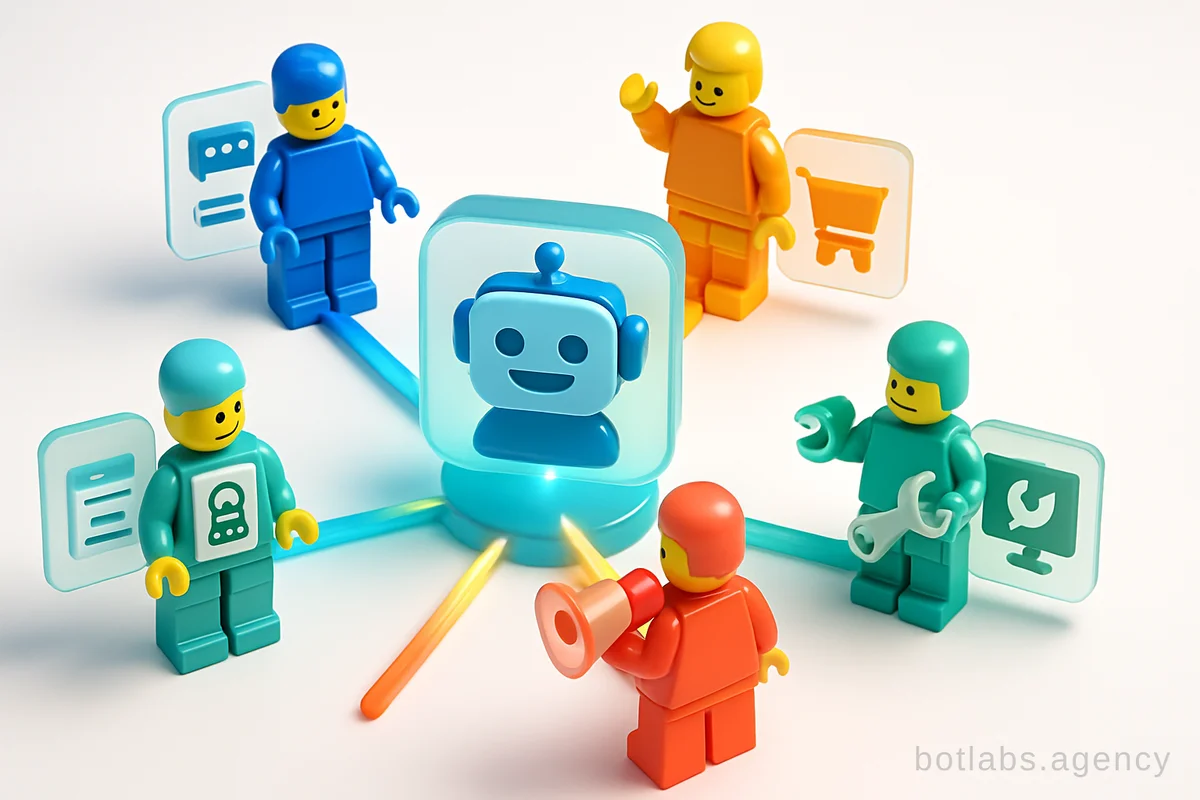
The need for fast, reliable, and cost-effective customer interaction is driving the adoption of chatbots. From e-commerce to healthcare, businesses leverage chatbots to automate repetitive tasks, provide 24/7 support, and drive sales funnels.
| Benefit | Manual Process | Chatbot Automation |
|---|---|---|
| Response Time | 1-2 hours average | 10-30 seconds |
| Availability | Business hours only | 24/7 |
| Scalability | Limited by staff | Unlimited |
| Error Rate | Human errors common | Minimal, consistent |
| Cost | High (salary, training) | Lower (one-time setup) |
For example, the Loyalty Chatbot for UA Made retail network developed by BotLabs Agency boosted repeat purchases by 34% by automating loyalty management. Similarly, clinics using chatbots for patient scheduling and triage report faster response times and increased appointment bookings (Chatbot for Medical Clinics).
Key Use Cases: How Chatbots Drive Business Value
Chatbots can be tailored to different business needs and industries. Here are some practical applications:
- Customer Support: Chatbots handle FAQs, complaints, and queries instantly, reducing pressure on human agents.
- Sales Automation: Lead qualification, product recommendations, and order processing—all automated.
- Loyalty Programs: Chatbots manage rewards, points, and special offers directly in messaging apps.
- Healthcare: Automate appointment scheduling, patient triage, and reminders.
- B2B Support: Offer instant product info, support, and order processing for dealers and partners (KLEIBERIT Case Study).
Chatbot Platforms: Choosing the Right Channel for Your Business
Picking the right platform is crucial for chatbot success. The most popular options in 2026 include:
- Telegram Bots & MiniApps: Flexible, multi-functional, and widely adopted for both B2C and B2B solutions.
- WhatsApp Bots: Essential for international communication and quick customer support.
- Viber Bots: Favored by retail and FMCG brands for loyalty programs and campaigns.
- Web Chatbots: Embedded on websites for lead capture, support, and onboarding.
| Platform | Best For | Unique Feature |
|---|---|---|
| Telegram | E-commerce, B2B | MiniApps, multi-channel |
| Global consumers | Secure, broad user base | |
| Viber | Retail, loyalty | Promotions integration |
| Web | Any sector | Seamless site integration |
Implementation Steps: How to Deploy a Chatbot Effectively
- Define Objectives: Start by identifying the business goals your chatbot will address—sales, support, or engagement.
- Select Platform: Choose based on your audience: Telegram, WhatsApp, Viber, or web.
- Design Conversational Flow: Map out user journeys, common questions, and escalation paths to humans.
- Integrate with Systems: Connect your chatbot to CRM, ERP, and analytics for seamless automation.
- Test and Launch: Pilot with a small audience, gather feedback, and iterate.
- Monitor & Optimize: Use analytics to track performance and adjust for better ROI.
BotLabs Agency typically delivers custom chatbots in 2-4 weeks, including strategy, development, and post-launch support.
Real-World Results: BotLabs Agency Case Studies
- UA Made Retail Network: 34% increase in repeat purchases with a loyalty chatbot (read the case study).
- Medical Clinics: Patient scheduling automation cut response time from 2 hours to 30 seconds (Chatbot for Medical Clinics).
- B2B Dealer Support: Automated product spec search and order processing with a dedicated chatbot (KLEIBERIT Case Study).
Overcoming Common Chatbot Challenges
Despite their benefits, chatbot projects can face pitfalls:
- Poor User Experience: Overly complex or generic flows frustrate users.
- Lack of Integration: Isolated bots fail to deliver full automation benefits.
- Insufficient Maintenance: Chatbots need regular updates and support.
Measuring Success: KPIs and Analytics
To ensure chatbot success, track these metrics:
- Response Time: How quickly are users getting answers?
- Resolution Rate: Percentage of issues solved without human intervention.
- User Engagement: How many users interact and return?
- Conversion Rate: Leads or sales generated via chatbot.
- Customer Satisfaction (CSAT): User feedback and ratings.
| KPI | Description | Target (2026) |
|---|---|---|
| Avg. Response Time | Seconds to first reply | <30s |
| Resolution Rate | % resolved by bot without escalation | >80% |
| Conversion Rate | Leads/sales closed via chatbot | +20% YoY |
| User Retention | Repeat interactions in 30 days | 50%+ |

Need a chatbot for your business?
We automate your processes and boost sales.