AI Call Analytics for Sales Departments: How to Calculate Real ROI in 2026
Introduction: Why AI Call Analytics is Mission-Critical for Sales in 2026
In 2026, the best-performing sales teams are harnessing the power of AI to gain a sharpened edge. Traditional call monitoring is no longer enough—AI-powered call analytics offers a new level of insight, control, and efficiency. But how do you quantify the return on investment (ROI) of such technology? This article unpacks how AI call analytics can propel sales departments forward and offers a practical approach to using a chatbot ROI calculator for confident decision-making.
What is AI Call Analytics? Core Features and Capabilities
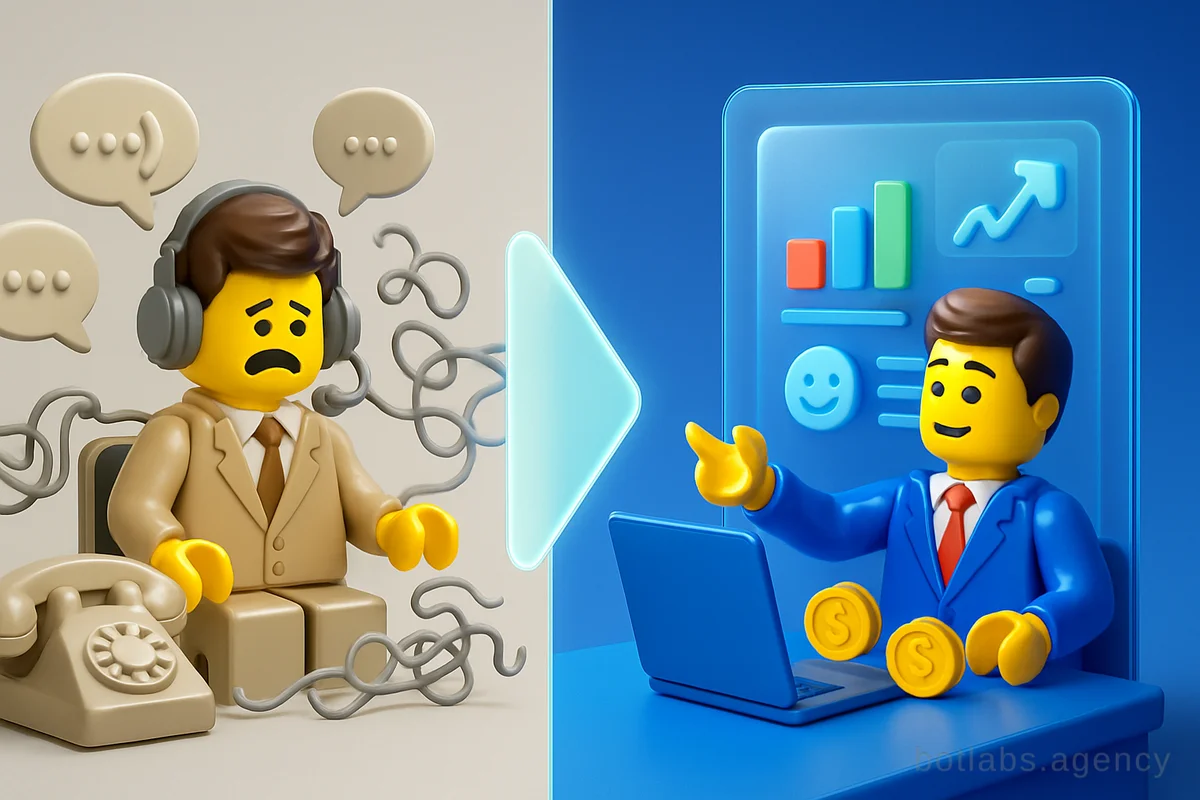
AI call analytics leverages speech-to-text, natural language processing, and emotion analysis to automatically transcribe, summarize, and evaluate sales calls. Instead of supervisors spending hours listening to select recordings, every call can be analyzed instantly—across languages, departments, and geographies.
Key AI Call Analytics Features:
- Automated Transcription: Instant conversion of audio to searchable text.
- Content & Structure Analysis: Extraction of key topics, customer needs, and call outcomes.
- Emotion & Sentiment Detection: Identifies client mood (positive/neutral/negative) and stress points.
- Script Compliance: Checks agent adherence to sales scripts and communication standards.
- Customizable Profiles: Tailored analysis criteria for different teams, locations, or experience levels.
- Integration with CRM: Links call summaries and insights directly to leads or deals.
Tip: AI call analytics can be set up to monitor only specific departments or campaigns, focusing resources where they matter most.
Business Challenges Solved by AI Call Analytics
AI call analytics directly addresses some of the most common sales management pain points:
| Challenge | AI Solution |
|---|---|
| Incomplete call reviews | 100% automated call analysis, no manual sampling needed |
| Slow feedback to agents | Instant summaries and recommendations after every call |
| Missed sales opportunities | Highlights lost leads and customer concerns |
| Inconsistent script compliance | Flags deviations and suggests coaching |
| Coaching new team members | Uses real call examples for targeted onboarding |
Example:
A retail e-commerce team handling over 300 calls per week found that AI analytics increased lead conversion by 28% (see KLEIBERIT Case Study). Supervisors saved 4 hours/week previously spent on manual reviews.
How AI Call Analytics Powers ROI: The Value Formula
Calculating ROI for AI call analytics or chatbot solutions is essential for business justification. Here's a practical framework:
ROI Calculation Formula
ROI (%) = ((Total Value Gained - Total Investment) / Total Investment) x 100
Where:
- Total Value Gained includes: increased sales, time saved, reduced churn, improved customer satisfaction, and cost avoidance (e.g., less QA staffing).
- Total Investment includes: software subscription, setup, training, and ongoing support.
Table: Sample ROI Calculation for a Sales Department
| Metric | Pre-AI | Post-AI | Improvement |
|---|---|---|---|
| Weekly Sales Calls | 300 | 300 | - |
| Calls Reviewed (%) | 10% (manual) | 100% (AI) | +900% |
| Lead Conversion Rate | 12% | 15.5% | +28% |
| Supervisor Review Hours | 6 | 2 | -67% |
| Monthly Revenue (USD) | $90,000 | $115,200 | +$25,200 |
| AI Software Cost (USD) | $0 | $1,500 | +$1,500 |
ROI Calculation Example:
- Total Value Gained: $25,200 (increased revenue) + ($50/hr x 16 hrs saved) = $26,000/month
- Total Investment: $1,500/month
- ROI = (($26,000-$1,500)/$1,500) x 100 = 1633%
Tip: Include both tangible (revenue, time) and intangible (quality, compliance) benefits in your calculations.
Practical Steps: Using a Chatbot ROI Calculator
A chatbot ROI calculator is an online tool or spreadsheet that helps you estimate the projected returns of deploying AI or chatbots in your business. Here’s how to approach it:
1. Gather Data
- Baseline sales and support metrics (calls, conversions, revenue)
- Time spent by staff on manual processes
- Customer satisfaction scores
2. Estimate Impact
- Use pilot project data or case studies (see Jewelry Factory Case Study)
- Conservative estimates: e.g., 10-30% improvement in efficiency/conversions
3. Input Costs
- Software/platform fees
- Integration and training costs
- Ongoing support/maintenance
4. Calculate Payback Period
- When will the investment ‘pay for itself’?
5. Review and Adjust
- Update assumptions as you gather real data post-launch
Numbered List: Key Inputs for Your Chatbot ROI Calculation
- Average number of calls/interactions per month
- Current conversion or resolution rate
- Average revenue per conversion
- Estimated AI/chatbot impact (as % increase)
- Cost of AI/chatbot implementation and operation
Real-World Case Studies: Measurable ROI from AI Analytics
Case: Retail Loyalty Chatbot
A national retail chain launched a Telegram-based loyalty chatbot, automating customer support and sales queries. The result? Repeat purchases increased by 34% (UA Made Case Study).
Case: B2B Dealer Support
A manufacturer integrated AI analytics with their dealer support chatbot, reducing manual review hours and boosting dealer satisfaction. (Read more)
Customization: Tailoring AI Analytics to Your Sales Process
AI call analytics solutions like Ringostat AI and Phonet allow you to create custom profiles for:
- Different departments (sales, support, marketing)
- Regional/language-specific teams
- New vs. experienced agents
You can select which calls to analyze, define what constitutes “success” for your business, and automate reporting to match your KPIs.
Tip: The most effective teams regularly update their AI profiles and scripts based on evolving market needs and customer feedback.
Best Practices for Maximizing ROI with AI Call Analytics
- Integrate with CRM: Ensure that AI outputs feed directly into your sales pipeline for actionable insights.
- Use Data for Coaching: Leverage AI-generated summaries and sentiment analysis for targeted staff training.
- Monitor and Iterate: Track improvements over time and adjust analysis criteria to focus on what drives results.
- Automate Quality Assurance: Rely on AI to flag outliers and compliance issues, freeing supervisors for strategic tasks.
Table: Compare Manual vs. AI-Driven Call Analysis
| Aspect | Manual Review | AI-Driven Review |
|---|---|---|
| Calls Reviewed | 5-15% | 100% |
| Review Time | 10-60 min/call | <1 min/call |
| Consistency | Varies by reviewer | Uniform, unbiased |
| Insights Provided | Subjective, limited | Data-rich, actionable |
| Scalability | Low | High |
Q1: How accurate is AI call analytics compared to human review?
A: Leading AI solutions now achieve over 90% accuracy in transcription and emotion detection. They also ensure consistency and speed that manual reviews cannot match.
Q2: Can AI call analytics handle multiple languages and accents?
A: Yes. Modern platforms support 50+ languages and regional dialects, making them suitable for global teams.
Q3: What if my sales process is unique?
A: Most AI analytics tools allow deep customization—define your own scripts, KPIs, and reporting formats to fit your business.
For more insights on leveraging AI in business, visit the BotLabs Agency Blog or request a free consultation.

Need a chatbot for your business?
We automate your processes and boost sales.