Business Scaling Strategies: Proven Approaches for Sustainable Growth in 2026
Introduction: Why Business Scaling Matters in 2026
In the fast-evolving business landscape of 2026, scaling has become more than just a buzzword—it's an essential strategy for companies seeking sustainable success. While growth focuses on simply increasing output and resources, scaling is about expanding impact and revenue while minimizing proportional costs. This distinction is critical as companies navigate rising customer expectations, rapid technological change, and global competition.
Tip: Scaling is about efficiency and agility—not just doing more, but doing better with less.
This article explores proven business scaling strategies relevant to today's market, drawing on industry insights and real-world case studies, including BotLabs Agency’s expertise in automation and AI chatbot development.
Business Growth vs. Business Scaling: Key Differences
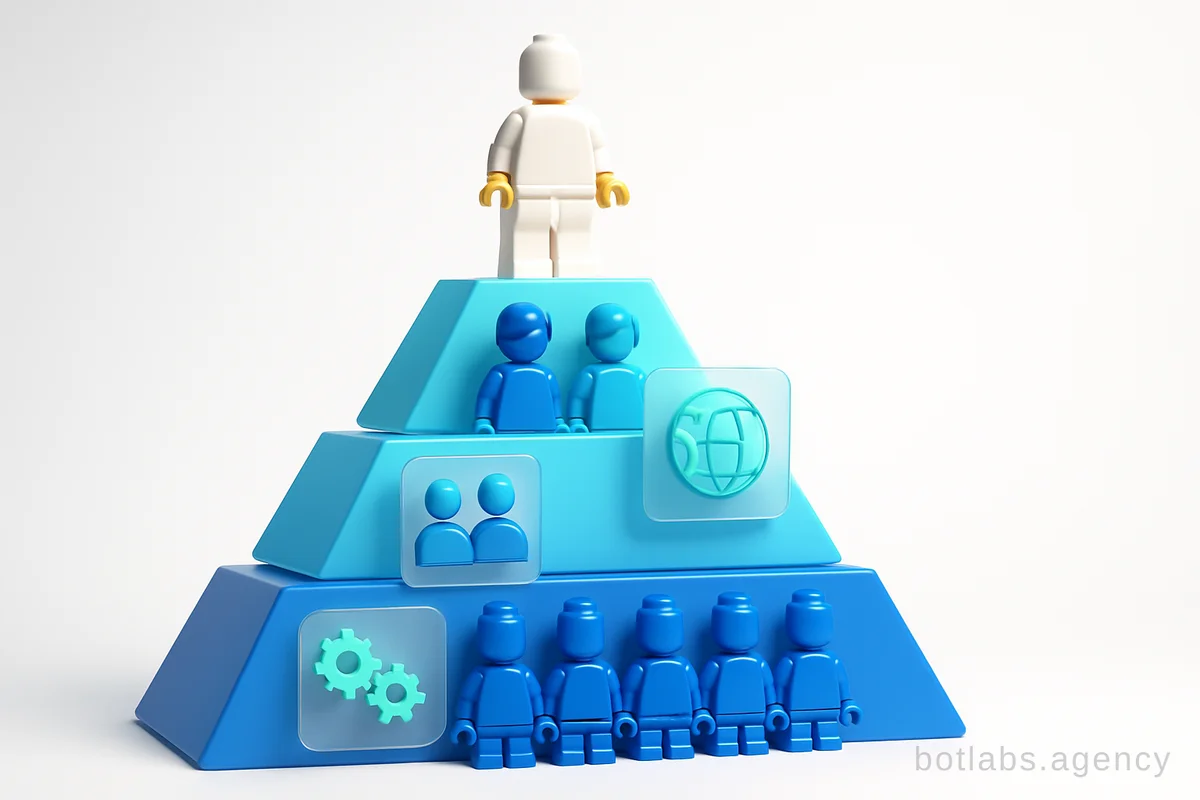
Understanding the difference between growth and scaling is the foundation of a sound strategy. Growth typically means more resources—hiring more staff, increasing marketing spend, or expanding facilities. Scaling, in contrast, means driving more output (revenue, customers, impact) with only incremental increases in costs.
| Aspect | Growth | Scaling |
|---|---|---|
| Resource Allocation | More resources needed | Optimize existing resources |
| Cost Structure | Costs rise with revenue | Costs stay low as revenue grows |
| Focus | Expansion | Efficiency & sustainability |
Recognizing these distinctions allows leaders to craft strategies that maximize impact without sacrificing efficiency.
Laying the Foundation: Preparing to Scale
A successful scaling journey starts with a robust foundation:
- Financial Assessment: Analyze cash flow, profitability, and funding needs.
- Core Competency Identification: Pinpoint what sets your business apart.
- Scalable Operations: Design processes that can handle growth seamlessly.
- Market Understanding: Conduct in-depth research to identify trends and white spaces.
- Infrastructure Investment: Ensure IT, logistics, and team structures are scale-ready.
Tip: Develop a roadmap with clear, measurable goals following the SMART framework (Specific, Measurable, Achievable, Relevant, Time-bound).
Five Proven Business Scaling Strategies
1. Market Penetration: Deepen Existing Relationships
Increasing your share within your current market is often the quickest win. This can mean upselling, cross-selling, or improving customer experience to boost loyalty and repeat purchases.
Case Example: BotLabs Agency helped UA Made launch a loyalty chatbot, resulting in a 34% increase in repeat purchases. By automating promotions and rewards, UA Made deepened customer relationships without ballooning service costs.
Practical Tips:
- Launch loyalty or referral programs.
- Leverage CRM systems to personalize offers.
- Use chatbots to automate engagement and support.
2. Product or Service Development: Innovate and Diversify
Expanding your offerings attracts new customers and increases value for existing ones. This could be new product lines, digital services, or enhanced features based on customer feedback.
Real-World Insight: BotLabs Agency’s chatbot for AstraDent enabled the dental clinic to automate appointment bookings and FAQs, freeing up staff and delivering new value to patients.
Practical Tips:
- Use feedback loops to drive product innovation.
- Pilot new services before a full rollout.
- Bundle products for increased perceived value.
3. Market Expansion: Target New Segments or Geographies
Scaling often means entering new markets—whether by geography or demographic. This diversifies revenue streams and reduces dependency on a single customer base.
Industry Example: Online retailers expanding into B2B or launching international operations have multiplied their addressable market with strategic research and tailored messaging.
Practical Tips:
- Research and adapt to local market needs.
- Form partnerships for easier entry.
- Localize offerings and support.
4. Strategic Partnerships: Leverage Collective Strengths
Collaborating with complementary businesses unlocks new audiences, resources, and technologies. Co-marketing, joint ventures, and technology alliances can accelerate scaling without the full investment.
Practical Table: Partnership Benefits
| Type of Partnership | Benefits | Example |
|---|---|---|
| Co-marketing | Expanded reach, shared costs | Retail + delivery app partnership |
| Tech Integration | Access to new features/audiences | CRM + chatbot system integration |
| Distribution | Faster market entry | Manufacturer + local distributor |
5. Technology and Automation: The Multiplier Effect
Automation is the backbone of modern scaling strategies. By implementing chatbots, CRM, and cloud solutions, companies can handle more customers with less manual effort.
Case Example: The KLEIBERIT dealer support chatbot automates product info requests and order processing, enabling the B2B network to serve more clients with the same support staff.
Automation Examples:
- Chatbots for 24/7 customer support (see more)
- Marketing automation for email and social campaigns
- Inventory management systems
Tip: Start automation pilots in one department, then expand once ROI is proven.
Building a Scalable Business Model
A scalable business model is built on:
- Efficient, repeatable processes
- Flexible pricing that matches demand
- Minimal manual intervention (automate where possible)
- Customer feedback loops for continuous improvement
Example: Restaurants using AI-powered chatbots for reservations, orders, and feedback (see: Chatbot for Restaurants) can scale service without adding headcount.
Strengthening Team and Culture for Scaling
Your team is your scaling engine. To prepare for high growth:
- Hire for adaptability and diversity.
- Foster transparent communication and a culture of learning.
- Upskill regularly—especially in digital tools and customer service.
- Recognize and reward innovation.
A motivated, empowered team ensures that processes and customer experience remain strong as volume increases.
Funding, Finances, and Smart Budgeting
Scaling requires capital—but also discipline. Explore diverse funding avenues (loans, venture capital, grants, or reinvested profits). Maintain rigorous budgeting, monitor cash flow, and ensure your finance structure can support larger operations.
Tip: Run financial scenarios to understand how scaling impacts margins, staffing, and liquidity.
Marketing and Sales: Fuel for Scalable Growth
Effective scaling means reaching more customers without dramatically raising costs. Digital marketing, social media, and automation tools are essential.
Actionable Steps:
- Identify and refine target segments.
- Use automated marketing campaigns.
- Leverage chatbots for lead capture and qualification.
- Continuously measure campaign ROI.
Monitoring KPIs and Continuous Improvement
Ongoing measurement is vital. Track:
- Revenue growth
- Customer retention and acquisition
- Cost per customer
- Automation impact (support tickets resolved, orders processed, etc.)
Analyze regularly and iterate strategies for sustained improvement.
Real-World Scaling: BotLabs Agency Case Studies
BotLabs Agency has enabled over 300 businesses to scale efficiently through automation and AI-driven solutions. Key outcomes include:
- UA Made Loyalty Chatbot: +34% repeat sales
- AstraDent Dental Clinic Chatbot: Automated bookings, reminders, and patient support
- KLEIBERIT B2B Chatbot: Automated dealer support and order processing
These cases illustrate how technology and smart strategy combine for powerful, scalable results.
Conclusion: Scaling Sustainably for 2026 and Beyond
Scaling is a multi-faceted journey that blends operational efficiency, technological innovation, and a people-first approach. By adopting these strategies, businesses can achieve sustainable growth, maximize ROI, and remain agile in a changing world. Ready to scale? Get a free chatbot consultation from BotLabs Agency.
Q1: What is the difference between scaling and growth in business?
A: Growth adds resources as output increases; scaling increases output with minimal new resources, driving efficiency.
Q2: How can automation help my business scale?
A: Automation streamlines processes, cuts costs, and enables you to serve more customers without hiring more staff. Explore more in our How Chatbots Transform Business in 2026 article.
Q3: What should I prioritize first when planning to scale?
A: Start with a strong business model, clear goals, and scalable systems—then invest in automation and team development.

Need a chatbot for your business?
We automate your processes and boost sales.