How to Scale Your Business: Proven Strategies, Mistakes to Avoid, and Real-World Examples
Why Scaling Matters in 2026
Scaling a business means more than just growing revenue—it’s about building a foundation for sustainable, exponential growth while controlling costs and maximizing profits. In the digital era, with the proliferation of automation and AI solutions like chatbots, scaling is both more accessible and more complex than ever before. Companies that scale effectively can outpace their competitors, access new markets, and weather economic storms.
Tip: Scaling is most successful when you’re responding to proven demand, not just ambition. Ensure your business processes are optimized before expanding.
When Is the Right Time to Scale Your Business?
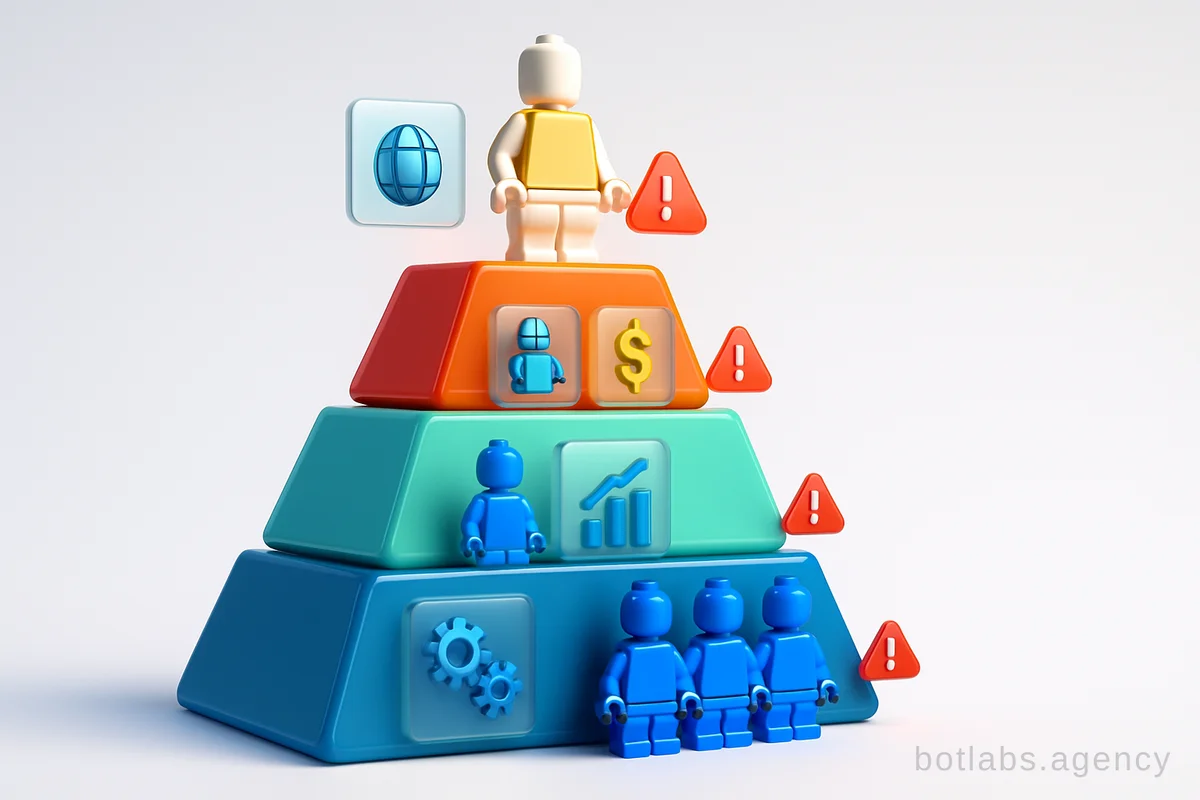
Scaling prematurely is one of the most common mistakes among entrepreneurs. The right time to scale is when your demand consistently outpaces your supply, your business processes are running efficiently, and your product-market fit is validated. For example, BotLabs Agency helped the UA Made retail network scale their customer loyalty with a chatbot that increased repeat purchases by 34%. This growth was only possible after validating customer needs and optimizing their loyalty program processes (case study).
Checklist to assess readiness for scaling:
- Is your current market saturated or showing signs of plateauing?
- Are your internal processes standardized and efficient?
- Do you have a scalable business model with healthy margins?
- Can your team (or technology) handle increased volume?
- Is there clear, sustained demand beyond your current capacity?
Core Strategies for Scaling Your Business
Scaling isn’t a one-size-fits-all journey. Here are the most effective, proven strategies used by successful organizations in 2026:
1. Delegate and Build Scalable Teams
Delegation is the cornerstone of scaling. Founders often struggle to let go, but holding onto every detail stifles growth. Instead, focus on recruiting and cultivating leaders who share your values and can operate autonomously. For example, Grammarly’s growth was fueled by a rigorous recruitment process that ensured every team member aligned with the company’s culture and long-term vision.
Tip: Empower managers, foster intrapreneurship, and use clear performance metrics to track progress.
2. Leverage Automation and Technology: The Chatbot Advantage
Business automation, especially through AI-powered chatbots, accelerates scaling by reducing manual workloads, improving customer experience, and enabling 24/7 operations. BotLabs Agency has implemented chatbots across multiple industries, such as:
- Automating patient scheduling and support for medical clinics (see the AstraDent case).
- Streamlining loyalty programs and catalog browsing for jewelry retailers (see the Jewelry Factory case).
- Enabling rapid customer support and booking in restaurants, gyms, and retail chains.
Table: Chatbot Impacts on Scaling in Key Industries
| Industry | Scaling Benefit | Example |
|---|---|---|
| Retail & E-comm | Increased repeat sales | UA Made Loyalty Chatbot (+34% repeat sales) |
| Healthcare | 24/7 support, efficiency | AstraDent Chatbot (automated bookings) |
| B2B Networks | Dealer support, orders | KLEIBERIT Chatbot (product search, order) |
| Hospitality | Automated bookings | Restaurant Chatbot (menu, reservations) |
3. Enter New Markets
Expanding to new geographies or customer segments is a classic scaling move—but it requires research, adaptation, and sometimes, new business models. Start with markets similar to your own for easier entry, or target emerging markets for growth potential. Diversifying markets also acts as insurance against local downturns.
Example: Companies like BotLabs Agency have expanded their chatbot solutions from local Ukrainian businesses to international clients, adapting their offerings for new audiences and regulations.
4. Combine Competencies and Centralize Expertise
Pooling expertise—whether through mergers, partnerships, or forming a holding structure—can accelerate scaling. Centralized departments (finance, marketing, legal) reduce redundancy and share best practices, freeing up resources for expansion. This approach was critical for fast-growing tech groups, allowing them to launch new ventures more efficiently.
5. Optimize Sales Systems and Product Offering
Sometimes, scaling doesn’t require new locations or markets—just better use of what you have. Audit your sales process to remove bottlenecks, incentivize repeat purchases, and increase average order value. For instance, BotLabs Agency’s loyalty bots and CRM integrations have transformed client retention and lead conversion rates.
Tip: Use data analytics from your digital tools (like chatbots) to identify and fix weak points in your customer journey.
6. Consider Franchising or New Business Models
If your brand has value and your processes are replicable, franchising can be a powerful scaling lever. Alternatively, launch new product lines or expand your service portfolio to capture adjacent markets.
Common Pitfalls and How to Avoid Them
- Scaling too soon: Ensure you’ve mastered your local market and optimized business processes before expanding.
- Neglecting compliance and due diligence: Always verify the integrity of partners and the origin of funds, especially when entering new markets. Clean reputation is crucial for opening accounts and attracting investors.
- Underestimating team culture: Misaligned hires can derail scaling efforts. Invest in a values-driven recruitment process.
- Ignoring market trends: Stay agile—what worked last year may not work tomorrow. Use crisis periods to innovate, not freeze.
Practical Scaling Methods: A Quick Reference Table
| Method | Pros | Cons or Risks |
|---|---|---|
| Open new branches | Expands footprint | Higher costs, operational complexity |
| Sell online | wider reach, lower cost | Requires digital transformation |
| Automate with chatbots | Scalable 24/7 service, cost save | Implementation, staff retraining |
| Enter new markets | Diversifies risk, new revenue | Regulatory barriers, competition |
| Franchising | Fast growth, shared risk | Brand control, franchisee quality |
| Expand product range | New customers, higher revenue | Inventory complexity, dilution |
Real-World Success Stories: Chatbot-Driven Scaling
- UA Made Retail Network: After automating their loyalty program with a Telegram chatbot, repeat purchases grew by 34%. Read the full case
- Medical & Dental Clinics: Automated appointment scheduling and patient support led to faster response times and increased retention (AstraDent case).
- B2B Dealer Networks: KLEIBERIT’s chatbot enabled dealers to quickly access product info and place orders, streamlining the entire support ecosystem (KLEIBERIT case).
Scaling Checklist: Key Steps for 2026
- Validate product-market fit and process efficiency
- Delegate and empower your team
- Leverage automation, especially chatbots
- Research and select new markets strategically
- Audit sales processes and customer journey
- Ensure compliance and build strong partner networks
- Monitor trends and stay agile
Tip: Want expert guidance? Request a free chatbot development consultation from BotLabs Agency.
Q1: How do I know my business is ready to scale?
A: When you consistently exceed current capacity, have efficient processes, and see clear demand, you’re ready to scale.
Q2: What are the risks of scaling too early?
A: Premature scaling can lead to operational chaos, wasted resources, and even business failure. Optimize your foundation first.
Q3: How can chatbots help in scaling my business?
A: Chatbots automate repetitive tasks, provide 24/7 support, and enhance customer engagement, making it easier to handle increased volume without proportional cost increases.

Need a chatbot for your business?
We automate your processes and boost sales.