Lead Generation in 2026: Strategies, Tools, and Real Business ROI
Introduction: Lead Generation in 2026
In today’s competitive landscape, lead generation—often called "lead-gen"—is the engine that powers business growth. Whether you run a B2B tech startup, an e-commerce store, or a service agency, your ability to attract, nurture, and convert leads is what separates sustainable success from stagnation. But what exactly is lead generation in 2026? How have strategies evolved, and which tools deliver real ROI?
This article demystifies modern lead generation, blending expert insights, practical frameworks, and real case studies—including automation and chatbot-driven solutions by BotLabs Agency.
What Is Lead Generation? Key Concepts and Definitions
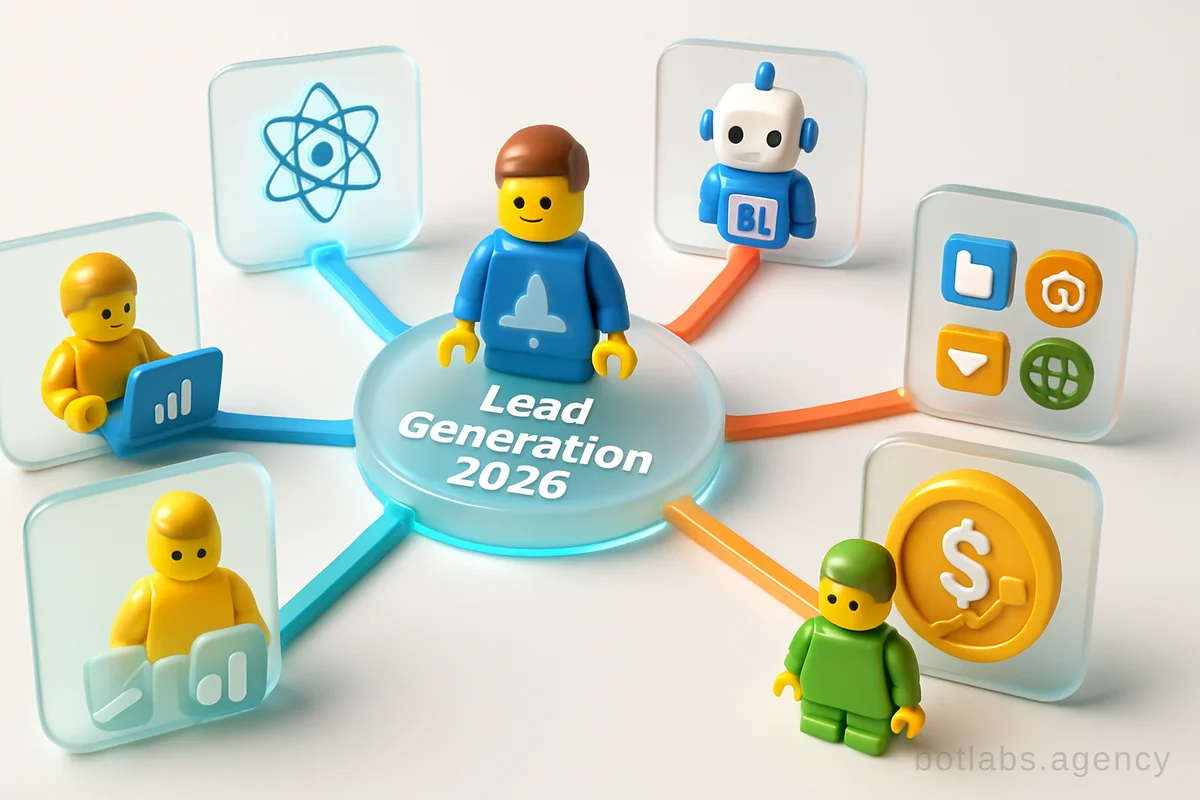
Lead generation is the marketing process of attracting and capturing the interest of potential clients—"leads"—for your business’s products or services. The goal is to obtain contact information (like email or phone) to nurture them into paying customers.
There are three core types of leads:
| Type | Description | Example |
|---|---|---|
| Cold | Minimal interest; no engagement beyond basic website visit | Browses site, leaves |
| Warm | Shows some interest; downloads content, subscribes, or inquires | Downloads eBook |
| Hot | Highly interested; requests a demo, quote, or sales call | Fills contact form |
Tip: Not all leads are created equal—prioritize your sales and marketing efforts according to lead quality.
Outbound vs. Inbound Lead Generation: Approaches Compared
Lead generation strategies fall into two main categories:
1. Outbound Lead Generation
Outbound lead-gen is proactive: your team reaches out to prospects directly. Common outbound tactics include:
- Cold calls
- Personalized cold emails
- LinkedIn outreach
- Direct messages in business networks
Outbound shines in B2B sales, allowing you to target decision-makers precisely. For instance, LinkedIn now hosts over 900 million users, with 63 million decision-makers—a goldmine for B2B outreach.
2. Inbound Lead Generation
Inbound lead-gen draws prospects in through value-driven content and marketing. Key inbound methods:
- Blogging and SEO
- Social media marketing
- Webinars or educational videos
- Lead magnets (eBooks, checklists, templates)
- Email newsletters
When a prospect fills out a landing page form for a free guide, for example, they've become an inbound lead. This approach builds trust and authority while qualifying leads organically.
Callout: > Tip: Combine both inbound and outbound for a robust lead pipeline—outbound fills gaps, inbound nurtures long-term relationships.
The Modern Lead Generation Funnel: From Prospect to Client
A successful lead-gen process moves prospects through these steps:
- Awareness: Prospects discover your brand (via ads, search, social, or word of mouth)
- Engagement: They interact—read a blog, watch a webinar, or download a lead magnet
- Conversion: They provide contact info in exchange for value (e.g., free consultation, checklist)
- Nurturing: Automated emails, follow-ups, or chatbots keep them engaged
- Sales Qualification: Sales team assesses if the lead matches your ideal customer profile
- Closure: Lead becomes a paying customer
Table: Example Touchpoints in the Lead Journey
| Stage | Channel/Action | Tool/Automation |
|---|---|---|
| Awareness | LinkedIn post, Google Ads | Social scheduler, ad platform |
| Engagement | Blog, webinar, chatbot | Content platform, chatbot |
| Conversion | Landing page form | CRM, form builder |
| Nurturing | Email drip, chatbot, SMS | Email automation, chatbot |
| Qualification | Demo call, sales interaction | CRM, lead scoring |
| Closure | Contract, payment | E-signature, CRM |
Lead Generation in Different Industries: Real-World Examples
Every industry has its own lead-gen nuances. Here’s how strategies differ:
E-commerce & Retail
Success is measured by conversion rates and repeat sales. A streamlined buying process, loyalty programs, and timely follow-ups are crucial. For example, BotLabs Agency developed a Loyalty Chatbot for UA Made retail network that increased repeat purchases by 34%.
B2B & SaaS
Lead magnets (like whitepapers), LinkedIn outreach, and webinars play a big role. Automated follow-ups and demo scheduling tools help qualify and convert high-value leads. Integration with CRM is essential for tracking prospect engagement.
Services & Clinics
Web forms, instant messaging, and chatbots streamline appointment booking and inquiries. For instance, the AstraDent Clinic chatbot automates appointment booking, FAQs, and reminders, reducing staff workload and increasing conversion.
Callout: > Tip: Use chatbots to capture and qualify leads 24/7—especially in service niches where instant response increases conversions.
Key Methods and Tools for Lead Generation in 2026
1. Content Marketing
- SEO-optimized blog posts, guides, and videos
- Interactive webinars, podcasts, and live Q&A
2. Email Marketing
- Automated drip campaigns
- Segmentation for personalized nurturing
- Triggered lead magnets
3. LinkedIn & Social Media Outreach
- Automated prospecting tools
- Personalized direct messaging
4. Chatbots & AI Automations
- Website & messenger bots to answer FAQs, book calls, and pre-qualify leads
- Integration with CRM for seamless handoff to sales
5. CRM & Lead Management Platforms
- Centralized database of leads
- Automated assignment, lead scoring, and pipeline tracking
- Integration with web forms, email, phone, and chat
Example: The KLEIBERIT B2B Dealer Support Chatbot by BotLabs Agency automates dealer inquiries, product specification searches, and order processing—streamlining lead capture and conversion.
6. Multi-Channel Approach
- Combine Google Ads, social ads, content, and chatbots
- Retargeting campaigns for nurturing warm leads
How CRM Systems Supercharge Lead Generation
A modern CRM is the backbone of scalable lead-gen. Here’s what it enables:
- Automatic Lead Capture: Web forms, chatbots, and integrations (Gmail, LinkedIn, messengers) funnel new leads directly into your CRM.
- Lead Scoring: Automatically rate leads by engagement and profile fit.
- Seamless Collaboration: Marketing and sales teams track prospect status and coordinate follow-ups.
- Automated Nurturing: Scheduled emails, reminders, and chatbot messages keep leads warm without manual effort.
- Data-Driven Decisions: Analytics reveal which channels and campaigns deliver the best ROI.
Tip: Don’t just collect leads—qualify, nurture, and track them through every step to maximize conversion rates.
Measuring Lead Quality and Campaign ROI
Not all leads are worth equal effort. Assess lead quality with:
- Level of interest (cold, warm, hot)
- Engagement with your content
- Match to ideal customer profile
- Conversion potential (budget, authority, need, timeline)
Calculate lead generation cost with this formula:
Lead Cost = Total Campaign Spend / Number of Leads Generated
Track these KPIs:
- Cost per lead (CPL)
- Conversion rate (lead to sale)
- Customer acquisition cost (CAC)
- Lifetime value (LTV) of a converted lead
Practical Tips for High-Impact Lead Generation
- Define Your Ideal Customer: Build detailed personas to target your messaging and offers.
- Align Marketing & Sales: Ensure both teams agree on lead definitions and hand-off rules.
- Use Lead Magnets: Offer irresistible value—free guides, checklists, or consultations—in exchange for contact info.
- Automate Where Possible: Deploy chatbots, email automation, and CRM workflows to scale efficiently.
- Test and Optimize: Continuously A/B test landing pages, emails, and ad creatives to improve conversion rates.
Case Study Highlights: Chatbots Driving Lead Generation
- The Loyalty Chatbot for UA Made captured leads and nurtured repeat buyers, boosting revenue by 34%.
- The AstraDent Clinic chatbot automated appointment booking, FAQs, and reminders, freeing up staff and converting web visitors into patients.
- The KLEIBERIT B2B Chatbot streamlined dealer onboarding, inquiries, and order processing for higher conversion in industrial sales.
Table: Comparing Lead Generation Channels in 2026
| Channel | Best For | Pros | Cons |
|---|---|---|---|
| SEO & Content | Inbound, B2B/B2C | Long-term, organic, trust | Slow ramp-up |
| Paid Ads | Fast traffic | Quick, scalable | Costly, needs optimization |
| B2B, outbound | Targeted, high-value leads | Labor-intensive/automatable | |
| Email Marketing | Nurturing | Personalized, automated | List quality dependent |
| Chatbots | Instant response | 24/7, scalable, data capture | Needs good setup |
| CRM Integration | All | Centralized, automated workflows | Requires onboarding |
Q1: What is the difference between a lead and a prospect?
A prospect is a potential client who fits your target audience but hasn’t yet shown interest. A lead has taken some action (e.g., filled a form), showing initial interest in your offer.
Q2: How do chatbots help with lead generation?
Chatbots instantly engage website or messenger visitors, answer questions, collect contact details, and pre-qualify leads before handing them to sales.
Q3: How can I measure lead-gen campaign success?
Track metrics like cost per lead, lead-to-customer conversion rate, and ROI. Use a CRM to monitor every lead’s journey from capture to sale.
For more on automating your lead-gen, see How Chatbots Transform Business in 2026 or explore our chatbot portfolio at BotLabs Agency.

Need a chatbot for your business?
We automate your processes and boost sales.