Retail Automation in 2026: How Chatbots Are Transforming Customer Support and Driving E-commerce Growth
Introduction: Retail Automation and the Rise of Chatbots
In 2026, the e-commerce and retail landscape is defined by speed, convenience, and personalization. Businesses face mounting pressure to serve customers across multiple channels, manage inventory in real time, and build lasting loyalty—all while keeping costs in check. At the heart of this transformation are chatbots: AI-powered assistants that automate support, enhance sales, and deliver personalized experiences at scale.
This article synthesizes the latest trends, technologies, and practical insights on how chatbots and retail automation tools are reshaping the industry. We'll explore the essential systems for modern retail, the unique value of chatbots, and actionable strategies—backed by BotLabs Agency's real-world cases—to unlock growth in 2026.
The Essential Retail Automation Stack: ERP, CRM, POS, and More
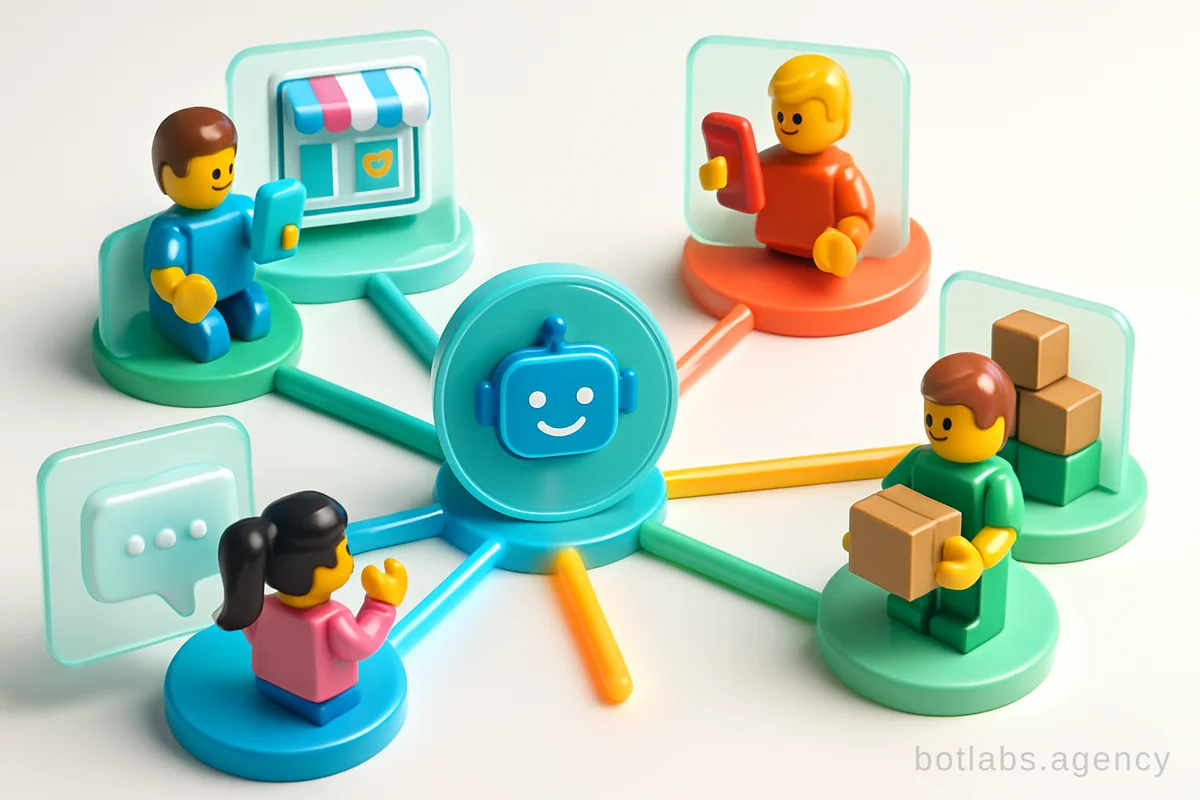
Retail automation starts with integrating core business processes. Key systems include:
| System Type | Core Functions | Leading Solutions |
|---|---|---|
| ERP | Inventory, finance, procurement, HR | Odoo, SAP Business One, Perfectum CRM+ERP |
| CRM | Customer database, loyalty, marketing | Uspacy, Odoo, Perfectum CRM+ERP |
| POS | Sales, discounts, returns, payments | Poster, BAS Retail, Odoo POS |
| Fiscal Systems (PPO) | Legal receipt registration, tax reporting | Checkbox, LiqPay, Poster PPO |
Tip: Map your business needs—number of stores, online channels, assortment breadth—to the right toolset. A single store may run on simple POS; multi-store, omnichannel operations require full ERP+CRM integration.
While ERP and CRM systems keep back-office operations synchronized, the real competitive edge comes from customer-facing automation—especially in support and sales.
Why Chatbots Are the Key to Retail Support Automation
Modern consumers expect instant, 24/7 support. Traditional call centers struggle with high volumes, while human agents can only handle a limited number of inquiries simultaneously. Chatbots solve these challenges by:
- Offering round-the-clock, real-time responses across messengers (Telegram, Viber, WhatsApp) and websites.
- Automating order status updates, product recommendations, and FAQs.
- Personalizing promotions based on purchase history.
- Freeing up staff from routine questions, allowing them to focus on complex cases.
Case Example: UA Made Loyalty Chatbot
BotLabs Agency developed a loyalty chatbot for the UA Made retail network, integrating it with the brand's loyalty program. The result? Repeat purchases grew by 34%, as customers received personalized offers and could access their loyalty cards directly in the messenger. Read the full case.
Personalization, Loyalty, and AI: The Next Frontier
Personalization drives engagement and sales. AI-powered chatbots analyze customer data to:
- Suggest relevant products and promotions.
- Issue digital loyalty cards or coupons directly in chat.
- Track and redeem points seamlessly.
For example, integrating chatbots with CRM or ERP enables:
- Automated customer segmentation.
- Targeted campaign delivery.
- Real-time loyalty balance updates.
Tip: Use chatbots to gather customer preferences, then tailor offers and support to individual needs. This not only increases conversion but also builds brand loyalty.
Automating Orders and Payments in E-commerce
Chatbots now enable end-to-end order automation:
- Customers can search products, add to cart, and checkout—all within the chat interface.
- Integration with payment gateways (LiqPay, Fondy, PayPal) streamlines transactions.
- Digital receipts and order tracking are delivered instantly.
Case Example: Jewelry Factory Product Catalog Bot
BotLabs Agency designed a chatbot for a jewelry manufacturer, automating product browsing, order placement, and loyalty management. Customers could explore the catalog, place orders, and monitor loyalty points—directly in the messenger. Learn more.
Chatbots for Omnichannel Retail: Bridging Online & Offline
Today's shopper moves fluidly between online and offline channels. Chatbots bridge this gap by:
- Providing store location and hours.
- Enabling online reservations or in-store pickup.
- Managing digital loyalty cards for both e-commerce and physical outlets.
Table: Chatbot Use Cases Across Retail Channels
| Channel | Chatbot Application | Business Impact |
|---|---|---|
| E-commerce | Product search, order, FAQ | Faster purchase, fewer drop-offs |
| Physical store | Store locator, digital queue | Reduced wait times |
| Omnichannel | Unified loyalty program | Increased retention |
Advanced Features: AI, Live Cart, and Customer Verification
Modern chatbots go beyond scripted responses. AI enables:
- Natural language understanding for complex queries.
- Predictive product recommendations based on past purchases.
- Automated workflows for returns, complaints, or warranty service.
Live Cart modules let retailers stream product demos, answer questions in real time, and guide customers to purchase during live video sessions—an emerging trend in digital retail.
For compliance, chatbots can verify customer age (for alcohol/tobacco sales) and authenticate users, reducing fraud and ensuring regulatory adherence.
Practical Steps: How to Implement Chatbot Automation in Retail
- Define Goals: Identify priority support, sales, or loyalty processes to automate.
- Select Integration Points: Choose which systems (CRM, ERP, POS) the chatbot will connect with.
- Choose Platform: Decide on messenger(s), web, or mobile app deployment.
- Design Flows: Map standard customer journeys—order, support, loyalty.
- Pilot & Optimize: Launch an MVP, analyze data, and iterate for better performance.
Tip: Start small—automate one core process, then expand as adoption grows.
Real-World Results: Numbers That Matter
- UA Made loyalty chatbot: 34% repeat sales growth
- Jewelry Factory bot: Automated catalog browsing, ordering, and loyalty
- B2B dealer support: +28% lead conversion after CRM chatbot integration (KLEIBERIT case)
Callout: Why Choose BotLabs Agency?
BotLabs Agency delivers custom chatbot solutions for retail and e-commerce in just 2-4 weeks—no hidden fees, full post-launch support, and measurable ROI. From concept to deployment, our team covers everything: analysis, development, CRM integration, and AI/ML features. Get a free chatbot consultation.
Q1: How much does it cost to implement a chatbot for retail automation?
A: Pricing depends on features, integrations, and scale. Simple chatbots start from a few hundred dollars; advanced AI-powered bots with CRM/POS integration cost more. Read more.
Q2: What is the difference between a chatbot and a mobile app for retail?
A: Chatbots offer instant, conversational experiences and are typically faster to launch and easier to use in messengers. See comparison.
Q3: Can chatbots handle complex product catalogs or loyalty programs?
A: Yes. With the right integration, chatbots can manage complex catalogs, personalized offers, and loyalty balances, as demonstrated in this jewelry factory case.

Need a chatbot for your business?
We automate your processes and boost sales.