Scaling Your Business in 2026: Step-by-Step Strategies, Pitfalls, and Proven Digital Tools
Understanding Business Scaling vs. Growth
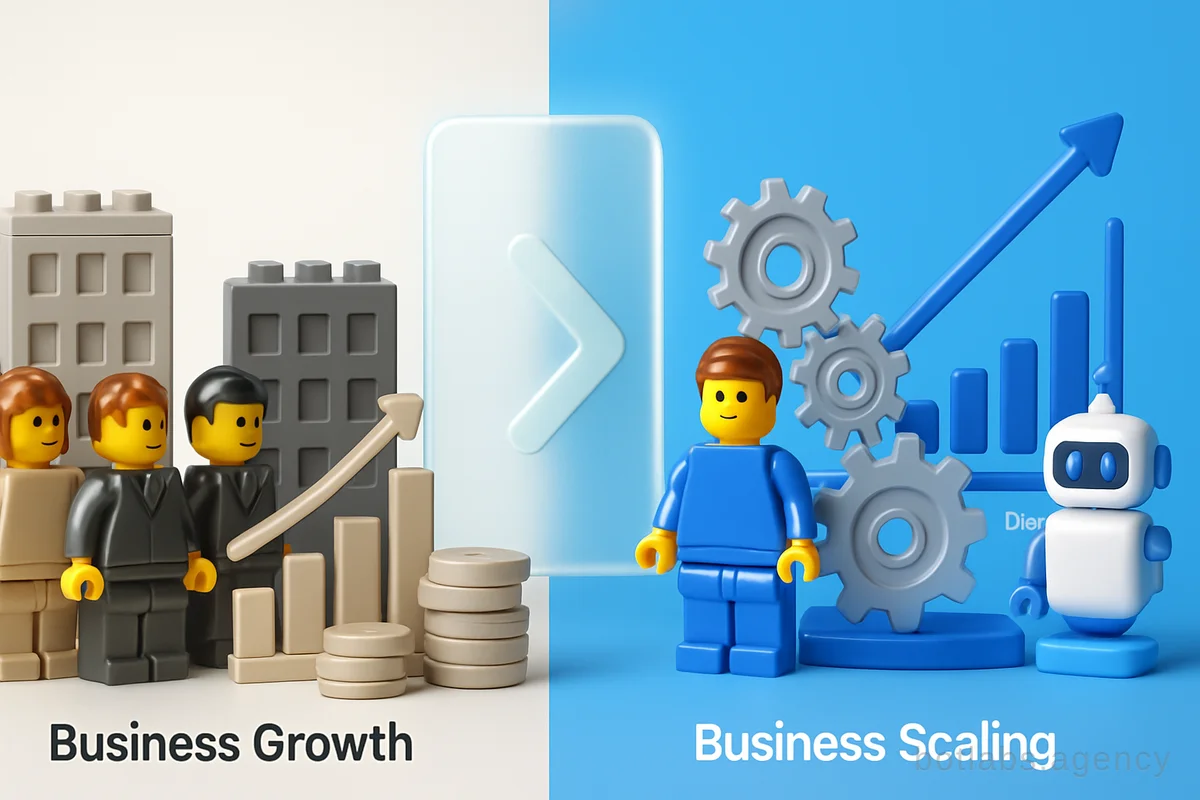
Scaling a business is not simply about growing bigger—it's about growing smarter. While business growth typically means expanding resources in direct proportion to revenue, scaling is about increasing revenue at a rate faster than costs. This distinction is critical for sustainable success.
| Aspect | Business Growth | Business Scaling |
|---|---|---|
| Resource Increase | Linear (adds staff, locations) | Strategic (process, automation) |
| Revenue vs. Cost | Grows together | Revenue grows faster |
| Innovation | Optional | Essential |
| Example | Adding stores | Automating sales with chatbots |
Tip: Before scaling, analyze if your current model can handle more business without proportionally increasing costs. If not, it's time to rethink your approach.
The Five Pillars of Effective Scaling
Drawing on best practices and the insights of scaling experts like Verne Harnish, successful business scaling involves five interconnected pillars:
- Market Dominance: Focus on becoming a leader in your niche, not just a participant. This could mean doubling down on your core products, expanding your presence, or investing in standout marketing. For instance, Coca-Cola's dominance in the U.S. beverage market (over 42% share) is built on relentless marketing and distribution excellence.
- Product Expansion/Innovation: Continuously update or broaden your product line based on customer needs. However, ensure your new offerings align tightly with your audience’s expectations—otherwise, added complexity can erode profits.
- New Sales Channels: Experiment with and test new channels—online stores, B2B wholesale, or partner programs. Piloting these before full-scale rollout helps identify ROI-positive avenues.
- Adjacent Niches: Consider expanding into related verticals. For example, a construction company launching a real estate agency. This requires research and resource planning, as it often means starting from scratch.
- Franchising and Licensing: For mature businesses, franchising or licensing can rapidly multiply your reach with less operational burden—if you have a replicable, high-performing system.
Step-by-Step Scaling Roadmap
Scaling is a process, not a one-time act. Here’s a practical roadmap based on leading business transformation frameworks:
1. Analyze Your Business Model
Assess how your company currently creates value. Are your offerings and operations ready to scale? Review customer segments, value propositions, key resources, and profit margins. Identify bottlenecks or elements that won’t scale efficiently.
2. Identify Growth Levers
Map out concrete opportunities to boost revenue and market share, such as digital innovation, product refinement, or new markets. Use customer feedback and market research to prioritize these levers.
3. Invest in Automation & Team
Automation is vital for handling increased demand without ballooning costs. For example, deploying a chatbot for gyms can automate bookings, freeing staff for higher-value tasks. Similarly, chatbots in retail (see UA Made loyalty bot) can boost repeat purchases by 34%.
Tip: Automate repetitive tasks first—think email campaigns, customer support, and invoicing. This not only saves money but also increases accuracy and customer satisfaction.
4. Test New Sales Channels
Pilot new distribution or marketing channels before large investments. For example, a supermarket chain launched a Viber chatbot to reach mobile-first customers, analyzing KPIs before expanding the program.
5. Double Down on What Works
Scale the initiatives and channels that deliver predictable, positive ROI. Monitor KPIs closely, and be ready to allocate more resources or hire key roles (growth marketer, sales development rep, operations manager) as needed. Don’t be afraid to sunset underperforming experiments.
Common Scaling Pitfalls—and How to Avoid Them
Despite its appeal, scaling can go wrong. According to Metriconix, only 1 in 10 startups succeed at scaling; 65% of companies fail within 10 years due to poor planning. Here’s what often goes wrong:
- Confusing growth with scaling: Merely adding more resources without process changes rarely yields sustainable margins.
- Lack of data-driven decision-making: Without tracking key metrics, you risk spending on unprofitable channels.
- Underestimating the need for leadership and team alignment: Scaling requires a motivated, empowered team—not just more people.
- Delayed automation: Postponing digital transformation leads to bloated costs and missed opportunities.
- Neglecting core customer experience: Rapid expansion can dilute service quality if not carefully managed.
Tip: Conduct regular marketing and operational audits. For IT and SaaS, this means reviewing not just campaign results but the alignment between marketing, sales, and business objectives. Learn more about aligning your team for transformation.
Scaling with Digital Tools: Chatbots as a Competitive Advantage
In 2026, automation is the backbone of scalable businesses. Chatbots, in particular, are proving invaluable across industries:
| Industry | Chatbot Use Case | Measurable Impact |
|---|---|---|
| Retail | Loyalty programs, order automation | +34% repeat purchases (UA Made case) |
| Healthcare | Appointment booking, patient triage | 24/7 support, reduced manual workload |
| Fitness | Class bookings, membership management | Higher retention, less admin overhead |
| Food Service | Table reservations, menu access | Faster service, more bookings |
| B2B/Industrial | Dealer support, product lookup | Shorter sales cycles, fewer errors |
Examples:
- UA Made loyalty chatbot: Multichannel bot with CRM integration drove significant growth in repeat sales.
- AstraDent AI chatbot: Automated patient support and appointment reminders in a dental clinic.
- KLEIBERIT dealer chatbot: Streamlined B2B product support and ordering for industrial clients.
These cases show how digital tools amplify team capacity, enable new business models, and delight customers at scale.
The Human Side: Leadership, Team, and Strategic Alignment
Scaling is as much about people as it is about systems. According to Verne Harnish, discipline, preparation, and a clear plan are essential—just like preparing for an Everest climb. Strong leaders foster a culture of proactivity, data-driven decision-making, and continuous improvement.
- Leadership development: Invest in leadership training and clear responsibility structures. Make sure team members own results, not just activities.
- Strategic alignment: Ensure all functions—marketing, sales, operations—work toward shared, measurable business objectives.
- Continuous learning: Encourage feedback loops, experimentation, and agile adaptation to changing market conditions.
Tip: Consider a fractional CMO or external consultants for strategic guidance during key transitions. An outside perspective can reveal blind spots and accelerate transformation.
Scaling Checklist for 2026
- Review your business model for scalability
- Identify and prioritize growth levers
- Invest in automation and digital tools (chatbots, CRM, analytics)
- Align your team with clear roles and goals
- Pilot and optimize new channels
- Scale up what works, cut what doesn’t
- Monitor key KPIs and adapt quickly
Table: Scaling Metrics to Track
| Metric | Why It Matters | Target/Best Practice |
|---|---|---|
| Customer Acquisition Cost (CAC) | Ensure profitable growth | Declining or stable as you scale |
| Lifetime Value (LTV) | Measure customer retention | LTV > 3x CAC |
| Churn Rate | Spot loyalty/experience issues | <5% for SaaS, lower for services |
| Channel ROI | Prioritize investment | Focus on top-performing channels |
| Automation Coverage | Efficiency indicator | Automate 60%+ of repeatable processes |
Tip: Integrate these metrics into dashboards your leadership reviews regularly. Data visibility is key during scaling.
Q1: What’s the difference between growing and scaling a business?
A: Growth increases resources and revenues together. Scaling increases revenue faster than costs, using smarter systems and automation.
Q2: When should I start automating with chatbots?
A: As soon as repetitive tasks (support, bookings, sales) become a bottleneck. Early automation lays the foundation for future growth.
Q3: How do I avoid losing quality as I scale?
A: Invest in process documentation, team training, and regular audits. Don’t scale what’s not working.
For more guidance, see our FAQ or explore our full blog for deep dives on automation, digital tools, and real-world scaling stories.

Need a chatbot for your business?
We automate your processes and boost sales.