Business Automation from Scratch: Strategies, Pitfalls, and Real Results in 2026
Why Business Automation from Scratch Matters in 2026
In today's volatile and unpredictable business climate, automation is not just a trend—it's a necessity for scaling and sustaining your company. Whether you’re launching a startup or optimizing an established enterprise, integrating automation from the outset gives you a structural advantage.
Research by McKinsey (2025) indicates that up to 70% of tasks in typical organizations can now be automated, freeing up time for innovation and strategic growth. For Ukrainian businesses and startups aiming to compete regionally and globally, automation is the backbone for resilience, efficiency, and scalability.
Tip: Automating early reduces your reliance on manual processes and key personnel, making your business more adaptable to market shocks and talent shortages.
The Business Case for Automation: Efficiency, Resilience, and Scale
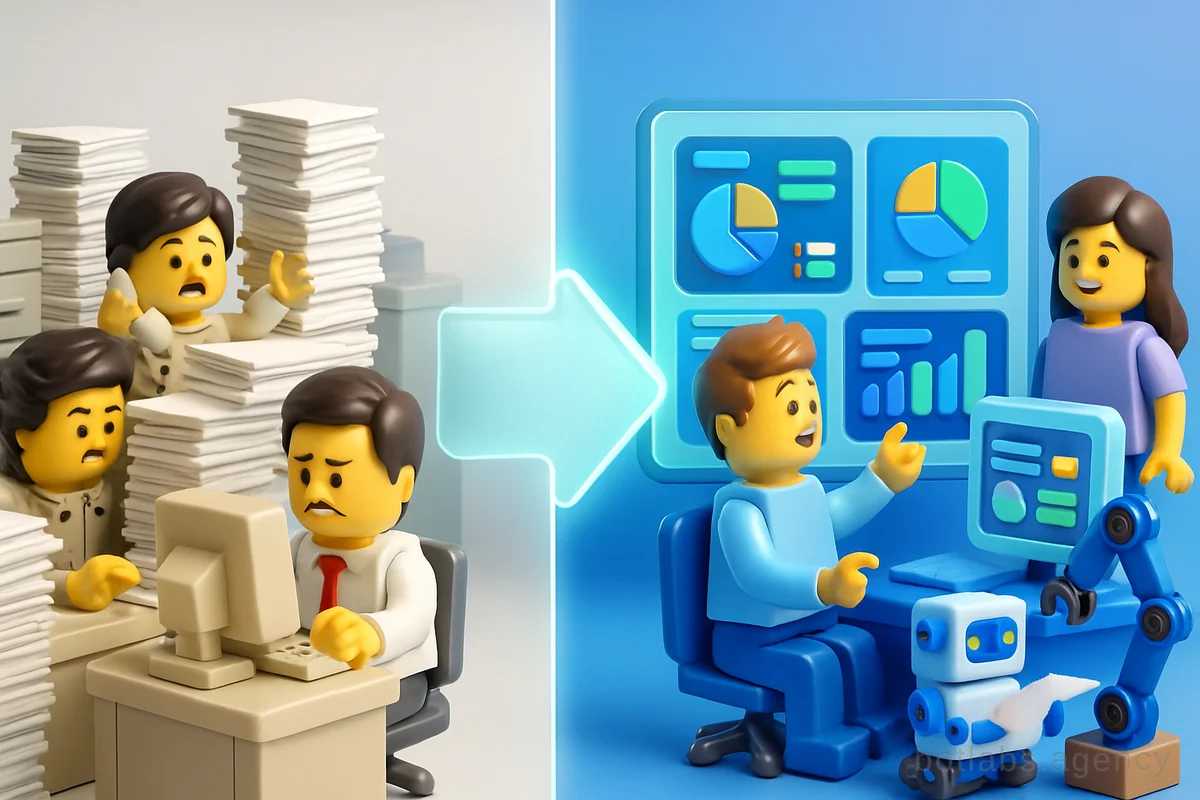
Automation is about more than cost-cutting—it's about building a business that can withstand disruptions, talent shortages, and rapid changes. In Ukraine, the digitalization index stands at 55.7/100 (Kyiv GovTech Centre, 2026), signaling a huge opportunity for companies to leapfrog competitors by adopting automation strategies from scratch.
Key Benefits:
- Efficiency: Operations are streamlined, reducing manual errors and freeing staff for high-value tasks.
- Cost Savings: Automated processes can cut transaction costs by up to 25% (Forrester, 2023).
- Resilience: Automated workflows are less vulnerable to staff turnover or supply chain disruptions.
- Speed: Faster customer response, reduced lead times, and more agile adaptation to market shifts.
- Data-Driven Decisions: Real-time analytics replace intuition, improving management precision.
Consider the KLEIBERIT B2B Dealer Support Chatbot, which automated dealer communications and order processing, significantly improving efficiency and customer satisfaction in a complex industrial network.
Essential Steps to Launching Automation in a New Business
Launching automation successfully requires a methodical approach. Here’s a proven roadmap:
- Market Research & Business Model: Understand your target market, competition, and the pain points where automation can deliver the most value.
- Process Mapping: List all business processes and identify those that are repetitive, prone to errors, or critical for revenue.
- Automation Prioritization Criteria:
- Frequency and repetitiveness
- Level of human error and risk
- Direct impact on profit/cost
- Ease and speed of implementation
- ROI potential (aim for payback within 6–18 months)
- Choose the Right Tools: From CRM systems to chatbots, select solutions that are scalable and customizable to your business model.
- Pilot & Iterate: Start with a pilot—such as automating lead intake or invoice generation—before expanding to more complex workflows.
- Continuous Improvement: Use analytics to monitor performance and refine processes.
What Processes to Automate First: A Practical Guide
Not all processes are created equal. Here’s a table summarizing which business processes typically deliver the fastest and largest returns from automation:
| Process Area | Examples | Recommended Tools/Platforms |
|---|---|---|
| Finance & Accounting | Invoices, expenses, reporting | ERP, online banking, e-signature tools |
| Sales & CRM | Lead intake, pipeline management | CRM, chatbots, email automation |
| Customer Service | Support requests, FAQs, feedback | AI chatbots, ticketing systems |
| Inventory & Logistics | Stock tracking, order fulfillment | Inventory management, logistics platforms |
| Marketing | Campaigns, analytics, segmentation | Marketing automation, analytics dashboards |
For example, a Loyalty Chatbot for UA Made retail network enabled a seamless loyalty program, resulting in a 34% increase in repeat purchases.
Tools and Technologies: Ready-Made vs. Custom Automation
Ready-Made Solutions
Off-the-shelf platforms (e.g., CRM, ERP, inventory management) are fast to deploy and cost-effective for standard needs. They work best for:
- Small to medium businesses
- Processes with widely accepted best practices
- Rapid deployment needs
Pros:
- Quick implementation
- Lower upfront costs
- Community and support
Cons:
- Limited customization
- May not fit highly specialized processes
Custom Solutions
For unique workflows or when competitive advantage depends on proprietary processes, custom automation is key. BotLabs Agency, for example, develops AI chatbots for medical clinics and B2B dealers, tailoring the solution to the exact needs of each client.
Pros:
- Tailored to your business
- Scalable as you grow
- Can integrate with existing systems
Cons:
- Longer development timeline
- Higher upfront investment
Tip: Start with ready-made tools for core processes, then consider custom solutions as your business scales or your needs grow more complex.
Common Mistakes in Business Automation (and How to Avoid Them)
- Trying to Automate Everything at Once: Focus on high-impact, repetitive tasks first.
- Ignoring Change Management: Involve stakeholders and train your team early.
- Underestimating Data Quality Needs: Garbage in, garbage out—ensure clean data flows.
- Neglecting ROI Analysis: Always set measurable goals and track payback.
- Overcomplicating the Stack: Too many disconnected tools create chaos; prioritize integration.
Callout:
Remember: Automation is a journey. Each success builds momentum for wider digital transformation.
Real-World Case Studies: Automation in Action
- Retail & Loyalty: UA Made’s loyalty chatbot boosted repeat purchases by 34% through seamless digital rewards.
- Healthcare: AstraDent’s AI chatbot automated appointment booking and reminders, freeing up staff time and improving patient satisfaction.
- Industrial B2B: KLEIBERIT’s chatbot streamlined dealer support and order processing.
To explore more, see the BotLabs Blog for detailed automation projects across industries.
Practical Automation Tips for 2026
- Automate from Day One: Design your workflows with automation in mind.
- Keep It Simple: Start with low-hanging fruit—don’t overengineer.
- Leverage AI: Modern chatbots and AI can handle complex inquiries and tasks.
- Monitor & Optimize: Use dashboards to track KPIs and adjust processes in real time.
- Plan for Scale: Choose platforms that can grow with your business.
Q1: What’s the best way to start automating a new business?
A: Begin by mapping your core processes and identifying repetitive, high-value tasks. Start with simple automation (e.g., CRM, chatbots) and scale up as you grow.
Q2: How soon will I see ROI from automation?
A: Most well-planned automation projects pay for themselves within 6 to 18 months through labor savings and efficiency gains.
Q3: Should I choose a ready-made or custom automation solution?
A: Use ready-made tools for standard needs. For unique workflows or competitive advantage, consider custom solutions as your business matures.
For more, visit our FAQ or contact BotLabs Agency for a free automation consultation.

Need a chatbot for your business?
We automate your processes and boost sales.