Chatbot for Ecommerce Store: ROI, Costs, and Implementation Strategies in 2026
Why Every Ecommerce Store Needs a Chatbot in 2026
In an era where instant service is the norm, chatbots have become indispensable for ecommerce businesses. Recent studies suggest that between 60% and 80% of online retailers have already integrated some form of chatbot, transforming customer service, order management, and sales. Modern chatbots—especially those powered by artificial intelligence—go far beyond answering basic FAQs. They offer 24/7 support, eliminate wait times, and can deliver a personalized customer experience that increases conversions and loyalty.
Tip: According to industry data, each minute of customer wait time can reduce the likelihood of purchase by up to 10%. Chatbots respond in seconds, keeping customers engaged.
Core Functions of an Ecommerce Chatbot
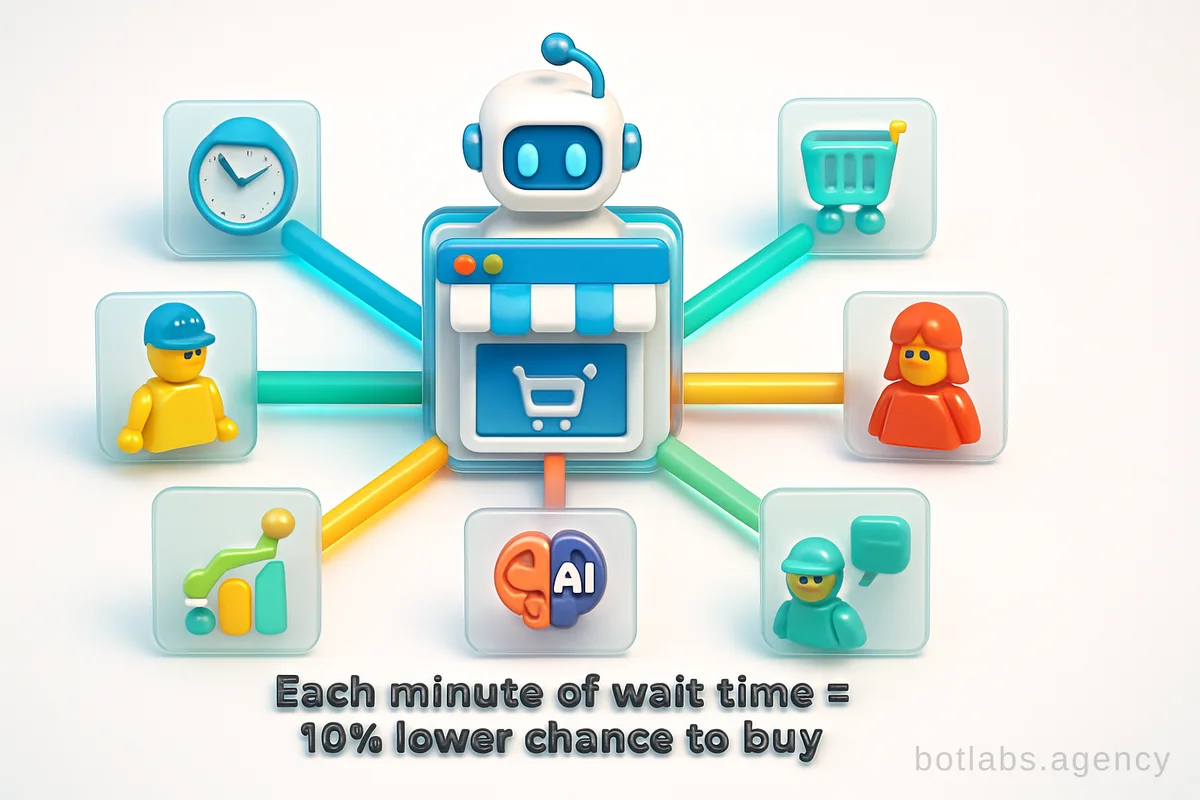
Today's ecommerce chatbots handle a wide array of tasks:
- Product Catalog Navigation: Users can quickly find products without scrolling through endless pages. Smart search, filters, and even natural-language queries make the process efficient.
- Order Placement: Customers can add items to their cart, confirm details, and complete purchases directly within the chatbot interface.
- Automated Delivery Scheduling: Integrated logistics options let users choose shipping methods or pickup times seamlessly.
- Payment Processing: Secure, multi-channel payment options—including Telegram Pay, LiqPay, and others—ensure frictionless transactions.
- Customer Support: Instant answers to questions about availability, warranties, returns, and more.
- Loyalty & Promotions: Integration with loyalty programs to show bonus points, activate discounts, and inform about ongoing promotions.
- Feedback Collection: Automated requests for reviews and feedback after purchase.
These steps condense the traditional ecommerce funnel, often reducing purchase time from several minutes to seconds.
Real-World ROI: How Fast Does a Chatbot Pay Off?
Let's get practical. How quickly can an ecommerce chatbot pay for itself? Consider a small online store selling designer t-shirts:
- Average order value: $20
- Monthly orders: 100
- Gross monthly sales: $2,000
- Net profit margin: 50% ($1,000/month)
- Custom chatbot cost (turnkey): $1,500–$3,000
ROI Calculation Table:
| Metric | Value |
|---|---|
| Chatbot Cost | $2,000 |
| Net Monthly Profit | $1,000 |
| Payback Period | 2 months |
In this scenario, the investment pays off in two months, not accounting for new customers, off-hours sales, or increased conversion rates. Larger businesses with more orders and higher average tickets will see even faster ROI.
Key Benefits: More Than Just Cost Savings
- 24/7 Sales: Capture orders after-hours and on weekends. No more lost sales due to unavailable staff.
- Reduced Payroll: One well-designed chatbot can replace a team of support agents, saving thousands per year.
- Consistent Service: Chatbots never forget promotions or use outdated prices. Every customer gets up-to-date, accurate information.
- Boosted Loyalty: Seamless loyalty program integration and proactive notifications foster repeat business. For example, the Loyalty Chatbot for UA Made retail network resulted in a 34% increase in repeat purchases.
- Actionable Analytics: Every customer interaction is logged, providing insights into popular products, drop-off points, and customer preferences.
Callout: In the supermarket sector, NOVUS launched a Viber chatbot to reduce app fatigue and improve engagement. It now manages loyalty cards, promotions, and order history directly in chat (more about NOVUS Viber Chatbot).
Advanced AI Chatbots: What’s Possible in 2026?
The era of simple, button-based bots is over. AI-powered assistants now:
- Understand natural language: Customers can type or speak requests in various ways—AI parses intent and responds correctly.
- Personalize recommendations: The chatbot recalls previous purchases, preferences, and browsing history to offer relevant products.
- Integrate with all business systems: CRM, ERP, payment gateways, and logistics platforms are all connected for real-time updates.
- Multichannel support: Serve customers in Telegram, WhatsApp, Viber, Facebook Messenger, website chat, and more, all from one backend.
- Automate lead qualification: For B2B, bots can ask pre-qualifying questions, collect data, and route high-value leads to human agents.
- Trigger proactive messages: Bots can nudge customers who abandon carts or offer help when users seem stuck.
- Voice and document processing: Accept orders via voice or process receipts and contracts sent as images.
Building vs. Buying: Platform Solutions vs. Custom Chatbots
Ready-made chatbot platforms (like ManyChat, SendPulse, UChat) offer fast setup and essential ecommerce features. These are great for basic needs—expect a monthly subscription cost and some technical limits.
Custom-developed chatbots are tailored to your exact workflows, integrate deeply with your systems, and can scale as you grow. While the upfront investment is higher, ongoing costs are lower, and you own your code and data.
Table: Pros & Cons Comparison
| Approach | Pros | Cons |
|---|---|---|
| Platform | Quick launch, low upfront cost | Limited customization, monthly fees, platform dependency |
| Custom Development | Flexible, scalable, fully owned | Higher initial cost, longer setup |
Tip: If your ecommerce store has unique workflows, complex loyalty programs, or requires deep CRM/ERP integration, a custom chatbot will deliver higher ROI over time.
Implementation Steps: From Idea to Launch
A structured approach guarantees chatbot success:
- Needs Analysis: Define the main use cases—sales, support, marketing—and list all required integrations.
- Data Preparation & Training: For AI bots, gather FAQs, product catalogs, and typical customer dialogues to train the system.
- Development & Integration: Build the chatbot, connect to CRMs, payment gateways, and logistics APIs.
- Testing: Pilot the bot with real users, refine scripts, and add fallback options to escalate complex issues to humans.
- Launch: Deploy across chosen channels (Telegram, website, etc.).
- Continuous Improvement: Monitor analytics, refine responses, and add new features as customer needs evolve.
Common Mistakes and How to Avoid Them
- Launching with a shallow knowledge base: Poorly trained bots frustrate users. Invest time at the start for better results.
- No human fallback: Always enable handoff to a live agent for complex or sensitive issues.
- Ignoring analytics: Use dialogue data to identify bottlenecks and sales opportunities.
- Underestimating support needs: Even AI chatbots require ongoing monitoring and updates.
Chatbots vs Human Support: Complement, Don’t Replace
The best approach is hybrid: let chatbots handle 70–80% of routine queries, freeing your staff to focus on VIP clients and complex cases. This is the model that delivers the highest customer satisfaction and cost efficiency.
Practical Tips for Maximizing Chatbot ROI
- Start with your most frequent customer queries.
- Integrate with your CRM and payment systems for end-to-end automation.
- Use chatbots to segment and qualify leads before passing them to sales.
- Regularly review bot analytics to spot new trends or issues.
- Promote your chatbot as a feature, not a replacement for personal service.
Case Study Highlights
- Loyalty Chatbot for UA Made: +34% repeat sales.
- Stolichnaya Jewelry Factory — Loyalty & Catalog Chatbot: Automated product catalog, ordering, and loyalty.

Need a chatbot for your business?
We automate your processes and boost sales.