The ROI of a Chatbot for Your Ecommerce Store: Costs, Payback, and Real-World Results in 2026
Introduction: Why Chatbots are Essential for Ecommerce in 2026
The digital marketplace has never been more competitive. Ecommerce stores are under constant pressure to deliver fast, personalized, and always-on customer experiences. In 2026, chatbots have evolved from simple FAQ responders to sophisticated AI-driven assistants that automate sales, provide 24/7 support, and drive customer loyalty. But what about their return on investment (ROI)? How quickly do chatbots pay for themselves, and what real-world results can you expect?
This article dives deep into the ROI of chatbots for ecommerce stores, exploring costs, payback periods, automation benefits, and success stories drawn from Ukrainian and global markets.
The True Value of Ecommerce Chatbots: Beyond Basic Automation
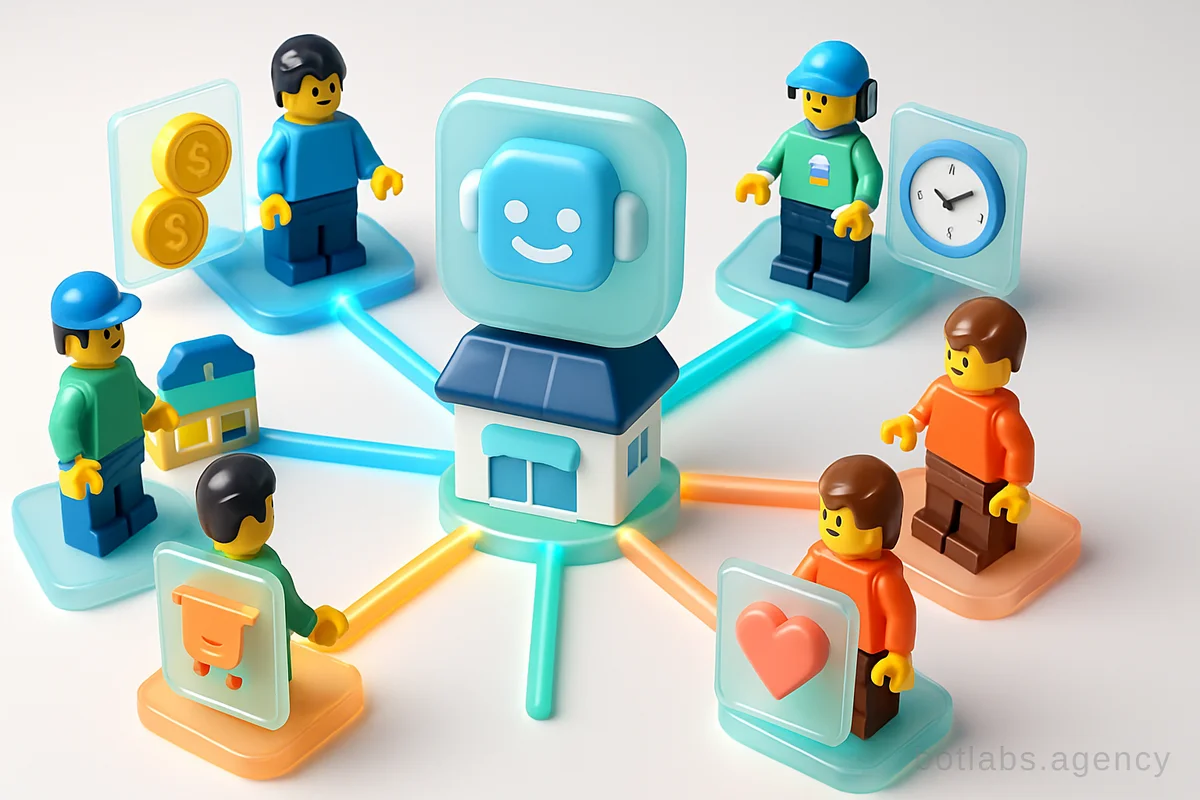
Modern ecommerce chatbots do much more than answer routine questions. Leading solutions like those from BotLabs Agency and other top providers:
- Automate order processing and payments directly in messaging apps
- Integrate with CRM/ERP for seamless inventory and customer management
- Provide personalized product recommendations based on purchase history
- Handle support inquiries, complaints, and feedback instantly
- Run loyalty programs and targeted promotions
- Collect actionable analytics and customer insights
Tip: The average chatbot reduces staff workload by up to 70%, freeing your team to focus on high-value sales and service.
Real-world case: The UA Made retail network saw a 34% increase in repeat purchases after launching a loyalty chatbot, showing that automation directly boosts revenue and customer retention.
How Chatbots Drive ROI: Key Benefits for Ecommerce Stores
Chatbots deliver value on multiple fronts. Here’s a breakdown:
| Benefit | Impact |
|---|---|
| 24/7 instant response | No lost sales after hours, higher customer trust |
| Automated order processing | Faster checkout, reduced abandoned carts |
| Lower staffing costs | Fewer agents needed for routine queries |
| Personalized recommendations | Increased average order value (AOV) |
| Loyalty program management | More repeat business, higher LTV |
| Integrated analytics | Better marketing & inventory decisions |
Example: According to recent studies, each minute a customer waits for a reply reduces their likelihood to purchase by 10%. Chatbots respond in seconds, dramatically improving conversion rates.
Chatbot Pricing and Payback: What Should You Expect?
Pricing for ecommerce chatbots varies based on complexity, integrations, and vendor. Here’s what the Ukrainian and global markets show in 2026:
- No-code platforms: From $300 for basic bots (limited features, monthly fees apply)
- Custom-developed bots: From $800–$2,500+ (one-time investment, full brand integration)
- Implementation time: 7 days for simple bots; 2–6 weeks for advanced, integrated solutions
Payback Period Calculation
Let’s use an example:
- Average monthly orders: 100
- Average order value: $20
- Additional orders from automation: +30% (common after chatbot launch)
Monthly revenue increase: 30 new orders × $20 = $600
If chatbot costs $1,000 to develop:
- Payback period = $1,000 / $600 ≈ 1.7 months
Typical payback periods range from 1 week to 6 months depending on your sales volume and automation level.
Tip: The more routine tasks and sales processes you automate, the faster your chatbot pays for itself.
Case Studies: Chatbots in Action for Ecommerce & Retail
UA Made: Loyalty Chatbot (+34% Repeat Purchases)
BotLabs Agency implemented a multichannel Telegram loyalty chatbot for UA Made. Key outcomes:
- 34% increase in repeat purchases
- Seamless bonus card management
- Automated order processing
Stolichnaya Jewelry Factory: Catalog and Loyalty Automation
For the Stolichnaya Jewelry Factory, a chatbot enabled product catalog browsing, order placement, and loyalty program engagement—all within one app. This streamlined the customer journey and drove higher purchase frequency.
NOVUS: Supermarket Viber Chatbot
A national supermarket chain NOVUS launched a Viber chatbot for loyalty tracking, promotions, and instant feedback—meeting customer expectations for quick, convenient communication.
Features that Matter: What an Ecommerce Chatbot Should Do
When selecting or building a chatbot for your ecommerce store, prioritize these essential functions:
- Product catalog navigation: Quick search, filtering, and recommendations
- Order placement: Seamless checkout, upsells, and payment integration
- Real-time stock and pricing: Accurate info from your inventory/ERP
- Customer support: Automated FAQs, status updates, complaint handling
- Loyalty and promo management: Personalized discounts, rewards, and reminders
- Analytics and reporting: Track conversions, common issues, and customer behavior
- Omnichannel support: Telegram, Viber, WhatsApp, web chat, and more
Tip: Integrate your chatbot with CRM systems and payment gateways (e.g., Stripe, PayPal, LiqPay) to maximize automation and data accuracy.
Ready-Made vs. Custom Chatbots: Which Pays Off Faster?
| Solution Type | Pros | Cons |
|---|---|---|
| Ready-made (SaaS platforms) | Quick setup, lower upfront cost, proven flows | Limited customization, monthly fees |
| Custom-developed | Fully tailored, scalable, no vendor lock-in | Higher one-time cost, longer launch time |
For most growing ecommerce brands, custom bots deliver superior ROI due to their flexibility and deep integration—especially as your store’s needs evolve.
Practical Steps: How to Implement a Chatbot for Your Ecommerce Store
- Analyze your sales and support workflows: Identify bottlenecks and repetitive tasks
- Define customer journey stages: From product discovery to post-purchase support
- Choose communication channels: Telegram, WhatsApp, Viber, web, or all of the above
- Decide on a solution type: Ready-made platform or custom development
- Plan integrations: CRM, payment, delivery tracking, analytics
- Design user flows: Map out dialogs, menus, and triggers
- Test and optimize: Pilot with real customers, gather feedback, and iterate
For a comprehensive comparison of digital platforms, see Website, App, or Telegram Mini App: Which Platform is Right for Your Business?
Real-World Results: Quantifying ROI and Business Impact
Businesses across Ukraine and beyond report:
- 30–80% reduction in routine workload for staff
- Up to 34% growth in repeat purchases (loyalty chatbots)
- 24/7 sales and support coverage: no lost orders after hours
- Customer satisfaction scores boosted by instant, consistent responses
- Payback periods as short as 1 month—even for small teams
Callout: According to global research, chatbots can save ecommerce businesses up to $4 billion annually and 1.5 billion hours of staff time.
Table: Typical Chatbot ROI Scenarios
| Store Type | Avg. Orders/Month | Avg. Order Value | Chatbot Cost (USD) | Monthly Revenue Gain | Payback Period |
|---|---|---|---|---|---|
| Small T-shirt Shop | 100 | $20 | $1,000 | $600 | 1.7 months |
| Mid-size Retailer | 500 | $30 | $2,500 | $4,500 | <1 month |
| National Chain | 5,000 | $30 | $10,000 | $30,000 | <2 weeks |
Results will vary based on store size, product type, and automation depth.
Common Questions About Ecommerce Chatbot ROI
How do I measure chatbot effectiveness?
Track metrics like conversion rate, customer satisfaction (CSAT), response time, and cost savings. Most platforms provide dashboards for these KPIs.
Are chatbots suitable for small ecommerce stores?
Yes! Even with low order volumes, chatbots save time, reduce manual errors, and boost customer loyalty—often paying for themselves within months.
What if my products or promotions change often?
Modern chatbots integrate with your backend or CMS, automatically updating catalogs, prices, and promo information in real time.
Conclusion: Is a Chatbot Worth the Investment for Your Ecommerce Store?
In 2026, the answer is a resounding yes. Whether you run a boutique shop or a national retailer, a well-designed chatbot is more than a nice-to-have—it’s a profit driver and a customer experience essential. With payback periods often under 3 months and ongoing savings on labor and lost sales, chatbot ROI is no longer theoretical. The key is selecting the right solution, integrating deeply with your stack, and optimizing the customer journey.
For a free consultation or to see real-world chatbot case studies, contact BotLabs Agency or explore our portfolio.
Q1: How much does it cost to build a chatbot for an ecommerce store?
A: Basic bots start at $300 (no-code), while fully custom, integrated bots range from $800–$2,500+ depending on features and integrations.
Q2: How quickly will my chatbot pay for itself?
A: Payback is typically 1 week to 6 months, depending on your sales volume and the scope of processes automated.
Q3: Will my team need technical expertise to manage the chatbot?
A: Most modern chatbots are easy to manage post-launch, with user-friendly dashboards. For complex integrations, initial setup may require developer support.

Need a chatbot for your business?
We automate your processes and boost sales.