The client: BUDE GOOD

BUDE GOOD delivers end-to-end renovation and construction projects, from interior design to building work and furnishing. For its sales team, BotLabs connected call recordings, deal history and alerts for the team lead in one workflow.
Illustrative scene with AI-generated people, not BUDE GOOD employees.
The challenge: understand call quality
Selective listening did not give the sales lead a complete picture. Reviewing every conversation manually was difficult, and some unsuccessful dialogues went unnoticed. The task was to turn recordings into clear results while leaving decisions about important situations to a person.
- Analyse calls against the team’s scripts and criteria.
- Account for earlier conversations and deal context.
- Keep summaries next to the deal in KeyCRM.
- Alert the lead to an issue, not every completed analysis.
- Provide useful material for feedback to salespeople.
The solution: three connected AI workflows

BotLabs connected call recordings with deal context in KeyCRM. Call Flow creates a transcript and evaluates the conversation against four criteria. Deal Flow uses the conversation history to prepare a summary and add a comment to the deal. Once the transcript, scores and summary are ready, Problem Flow reviews the situation. An identified issue triggers a Telegram message to the lead; no issue means no notification. Results and settings are available in the web panel, while a daily Google Sheets export supports regular reviews.
Tools and the role of AI
Solution type
Integrations and interfaces
From a conversation to the next action
Conversation quality
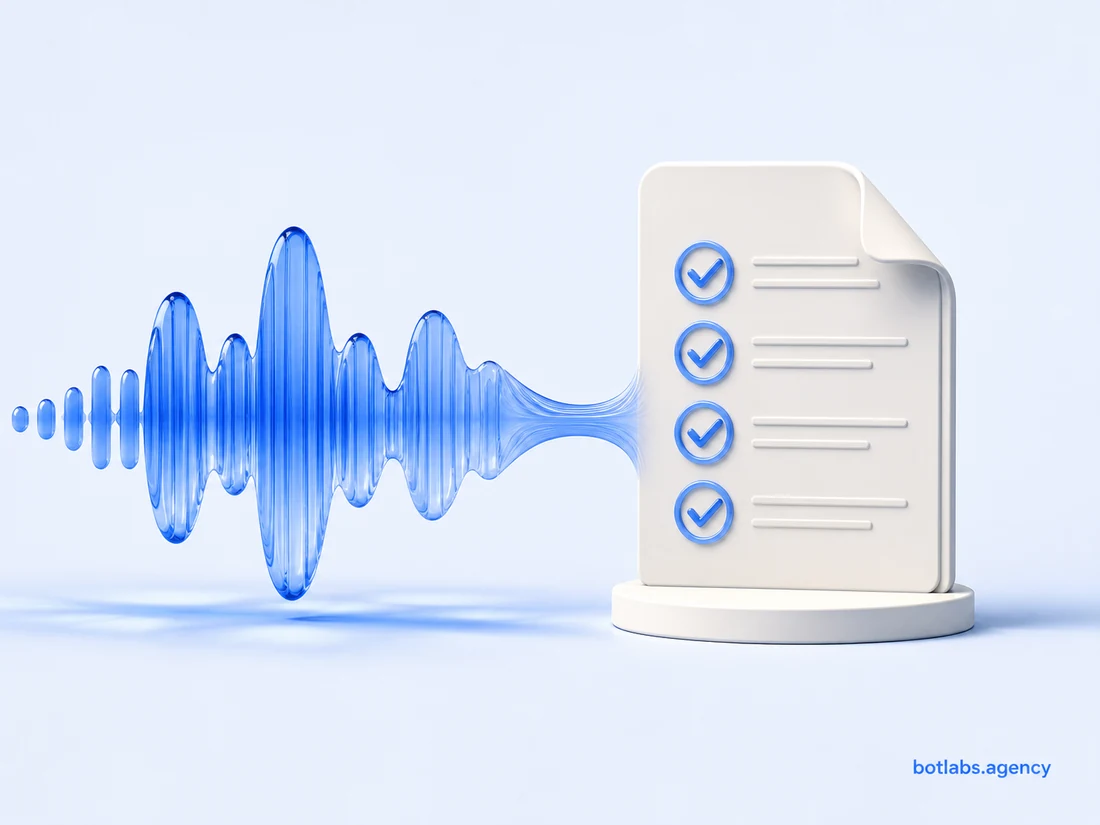
AI reviews rapport, needs discovery, presentation of the solution, objection handling and the close of the conversation. Tasks and criteria follow the team’s scripts. The result is saved for review, rather than replacing the lead’s judgement.
Deal memory
Deal Flow finds a deal by phone number and uses its history. A KeyCRM comment records what was discussed, what was agreed and the next step. A first call and a repeat contact have different analytical priorities: the customer’s needs or their objections.

The lead’s attention
Problem Flow considers words, tone and context to classify an issue. The Telegram message includes a short explanation, a severity level and a call link. The lead reviews the details and decides what to do. No issue means no separate notification.

Regular review
A daily export sends transcripts and scores to Google Sheets. This is material for feedback and team training, not automatic evidence of increased sales. Commercial impact requires separate measurement.

The sales lead’s working tools
The web panel brings together calls, transcripts, scores and processing statuses, with access to the relevant KeyCRM deal. Settings determine which salespeople’s conversations are processed and which rules guide the analysis.
Criteria matched to the team’s scripts
AI tasks specify a role, the aspects to review and examples of successful conversations. The chain defines the order of rapport, needs, presentation and objection analysis. This is a configuration for the client’s process, not a universal score for any sales team.
Context, not an isolated recording
The transcript shows what was said. The deal summary adds earlier conversations and agreements. Together they give the lead material for reviewing a specific situation and a way back to the source when details matter.
AI prepares. People decide
The system identifies situations that may require attention but does not make management decisions for the lead. AI conclusions need to be checked against the conversation. The configuration includes exceptions for callbacks and non-informative calls; coverage depends on the settings.
What changed for the sales lead
1
Transcripts and call scores are collected in one working interface.
2
The current call is considered alongside the deal history.
3
Conversation summaries are saved as KeyCRM comments.
4
Problem situations generate a separate Telegram alert.
5
Evaluation criteria follow the team’s scripts.
6
Daily exports provide material for feedback and training.
7
Final decisions and feedback remain with people.